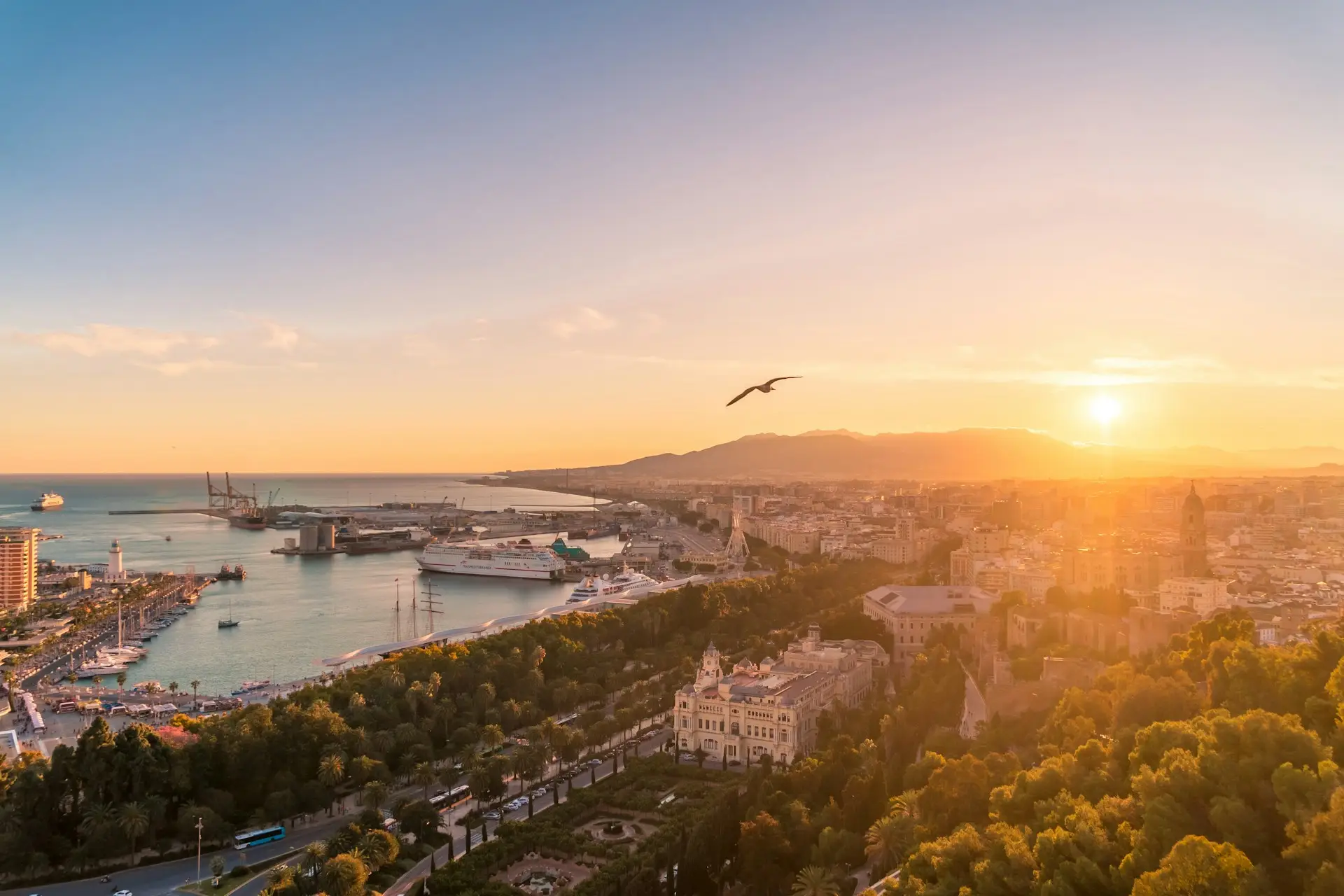
Málaga: far more than the gateway to the Costa del Sol
Málaga means museums, an Arab old town, espetos and urban beaches. What to see, where to eat the real espetos, and which monuments are free. With real prices.
↓For years, Málaga was just an airport: the place where you landed before heading off to Marbella, Nerja, or a Costa del Sol resort. That Málaga no longer exists. Over two decades it has transformed into one of the cities with the most museums in Spain, reclaimed its Arab old town, and filled an entire neighborhood with street art — all while keeping a beach just ten minutes from the center and the finest fish on the coast.
This article is about that Málaga: the one worth staying for, not just passing through. What to see, where to eat the real espetos, which monuments are free, and when to go.
1. Málaga is made for walking, and almost everything is within a kilometer
The first thing that surprises you: the historic center is compact. The cathedral, the Alcazaba, the Roman theater, the Museo Picasso, and the market all sit within a one-kilometer radius of calle Larios, the city's great pedestrian artery.
That changes how you visit: you don't need any transport for the essentials. On a long morning on foot you can take in the entire core. The center is flat (the climb only comes when you head up to the castle) and is built for walking.
A logistical heads-up: between 10:00 and 15:00, cruise ships flood the center with thousands of visitors. If you can, get up early — the Alcazaba at nine in the morning is a completely different experience from midday.
2. Arab Málaga: the Alcazaba, Gibralfaro, and the Roman theater
Málaga's monumental heritage is its Moorish legacy, and it is among the finest in Andalusia after Granada.
The Alcazaba. An 11th-century Nasrid fortress-palace, with courtyards, archways, fountains, and terraced gardens climbing the hillside. It is in outstanding condition, and the views over the city and port are magnificent.
The Roman theater. Sitting right at the foot of the Alcazaba and visible from the street at any hour, free of charge. A first-century theater that lay buried for centuries and now coexists, remarkably, with the Arab fortress above. The image — Roman below, Moorish above — captures Málaga in a single frame.
Gibralfaro Castle. Perched at the top of the hill and linked to the Alcazaba by the old city wall (though with a separate entrance — you cannot pass from one to the other from inside). You can walk up along a moderately steep path, or take bus 35. At the top, the ramparts offer a 360-degree viewpoint over Málaga and the Mediterranean. At sunset, it is the finest spot in the city.
The money-saving trick: the combined Alcazaba + Gibralfaro ticket costs around 5.50 €. But on Sundays from 14:00, both are free. If your schedule allows, take advantage. And buy online or arrive before 10:00 — after that, the queue can stretch to 40 minutes.
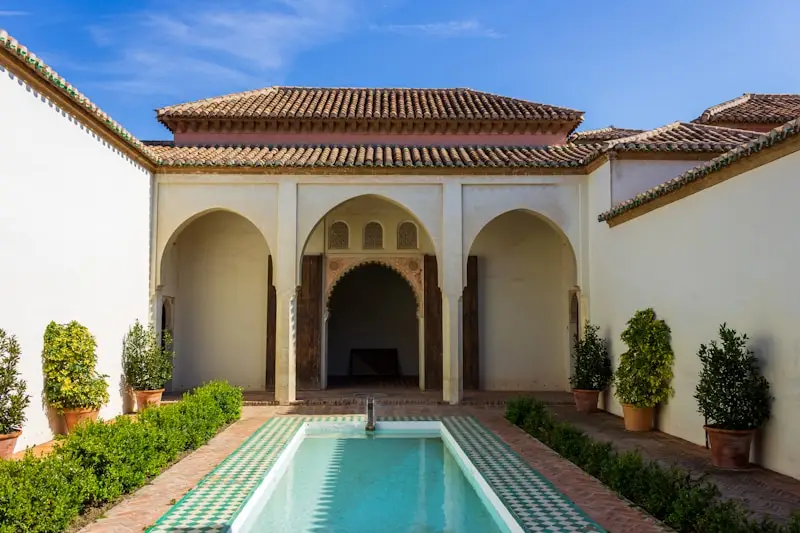
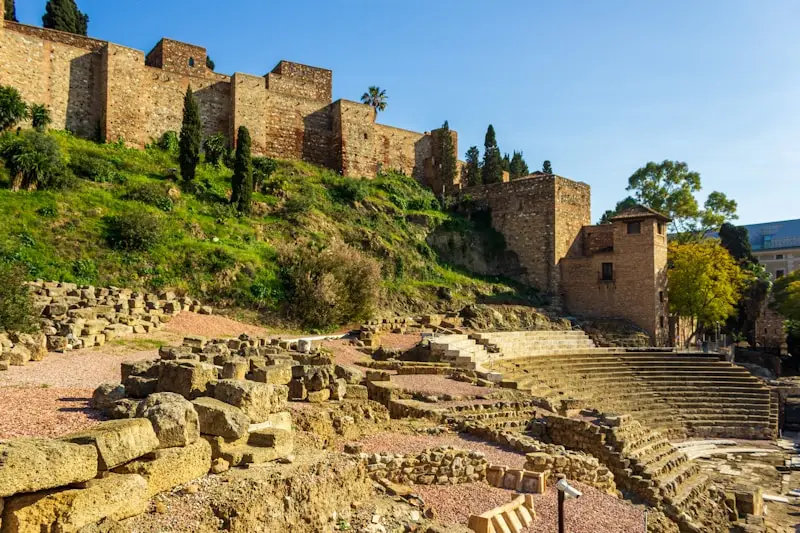
Fernando Távora / Unsplash
3. The city of museums: which ones are worth your time
Málaga boasts more than thirty museums. You won't see them all — here are the ones that matter.
Museo Picasso (entry ~12 €). Picasso was born in Málaga, and this museum in the Palacio de Buenavista was the spark that ignited the city's cultural renaissance in 2003. The permanent collection spans twelve rooms. If Picasso matters to you, this is the visit. It sells out on weekends and in high season: book online before you travel.
Museo Carmen Thyssen (~12 €). Housed in a 16th-century palace, it brings together Spanish painting from the 19th and 20th centuries — Sorolla, Zurbarán, Zuloaga. This is the museum for anyone who wants to understand Andalusian and costumbrista painting.
Centre Pompidou (the colorful "Cube" at the port). The Parisian Pompidou's outpost in Málaga, dedicated to 20th-century and contemporary art. The building itself — a multicolored glass cube on Muelle Uno — is already an attraction.
CAC Málaga (always free). The Contemporary Art Center, in the Soho. Excellent and free of charge.
Museo de Málaga (free for EU citizens). Set in the Palacio de la Aduana, it combines fine arts and archaeology. The building alone is worth the visit.
A word of advice: don't chain four museums into a single day. Pick one or two — Picasso is almost mandatory — and leave plenty of time for the streets, because in Málaga that is where life actually happens.
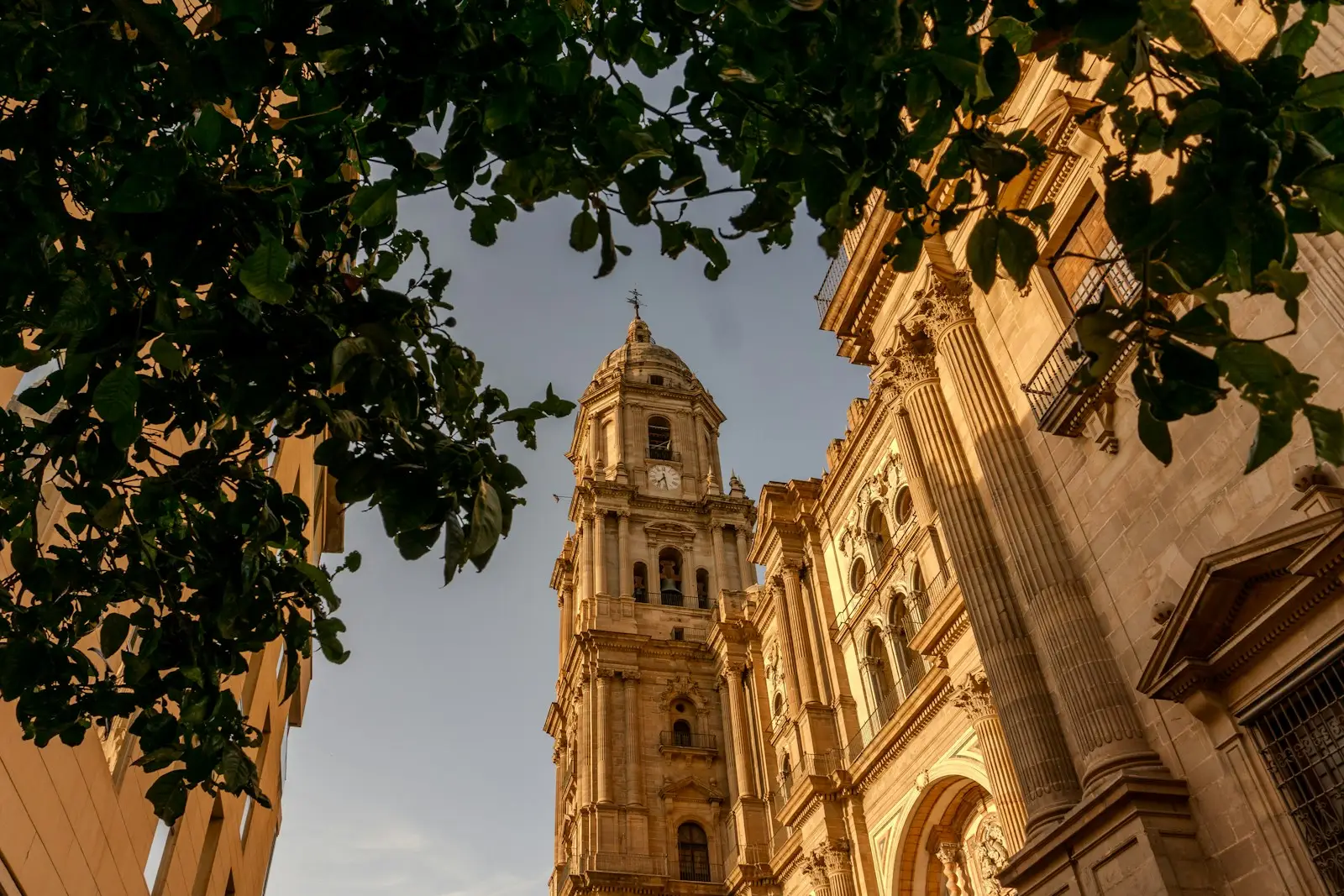
"For years Málaga was just an airport. That Málaga no longer exists."
Málaga · Fee4Me4. The Soho: an open-air museum
Between the center and the port, a neighborhood that nobody set foot in twenty years ago has become the city's arts district: the Soho.
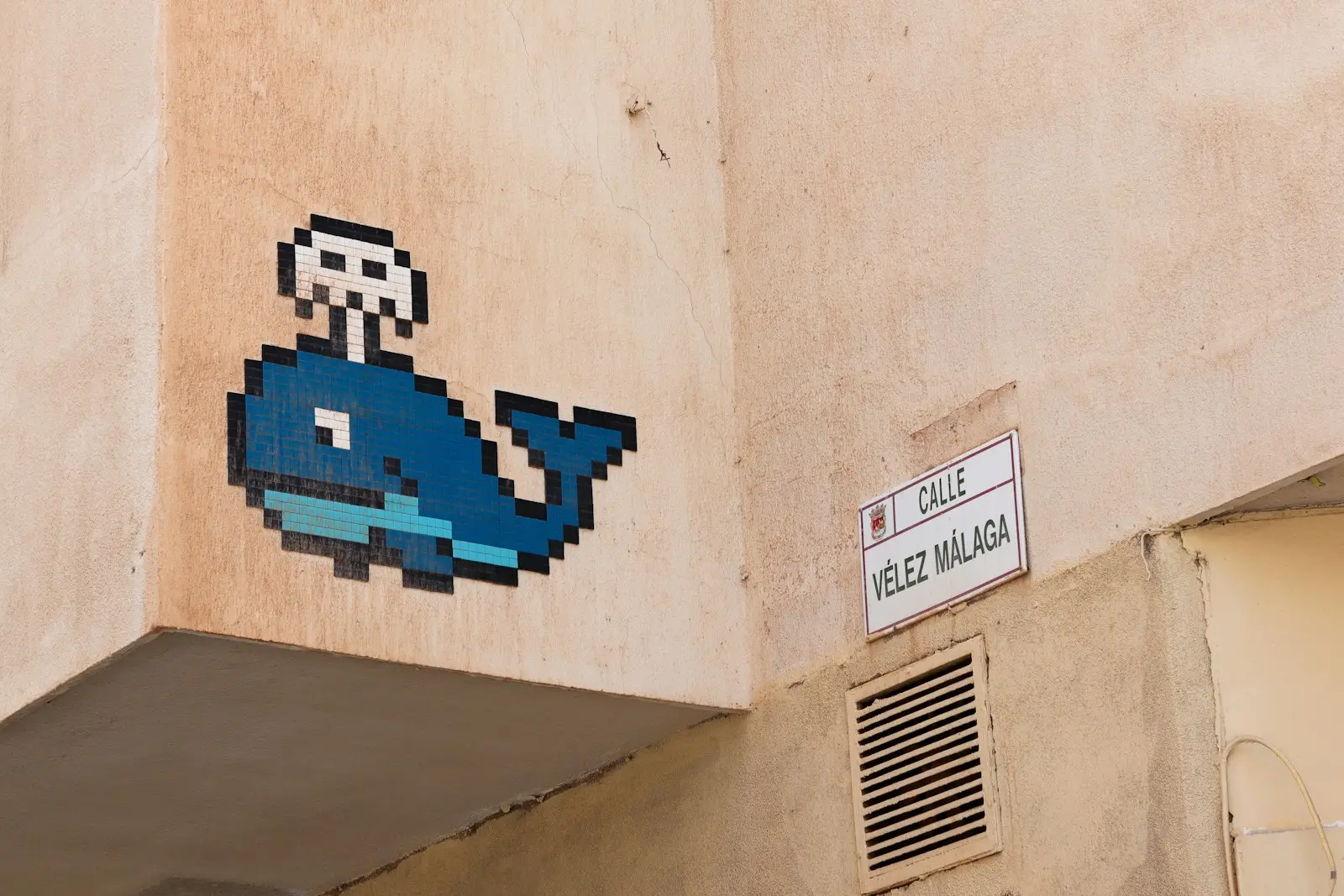
The transformation was driven by street art. Its streets are lined with monumental murals by world-class artists — Obey (Shepard Fairey), D*Face — painted across twenty-meter-high façades. Walking through it is like moving through an open-air gallery: look up and there is a work on every corner.
Beyond the murals, the Soho is home to the CAC, galleries, specialty coffee shops, and a food scene that blends local Málaga flavors with international influences. This is Málaga's alternative side, and you can explore it all on foot in an afternoon.
5. Espetos: where to eat the real thing
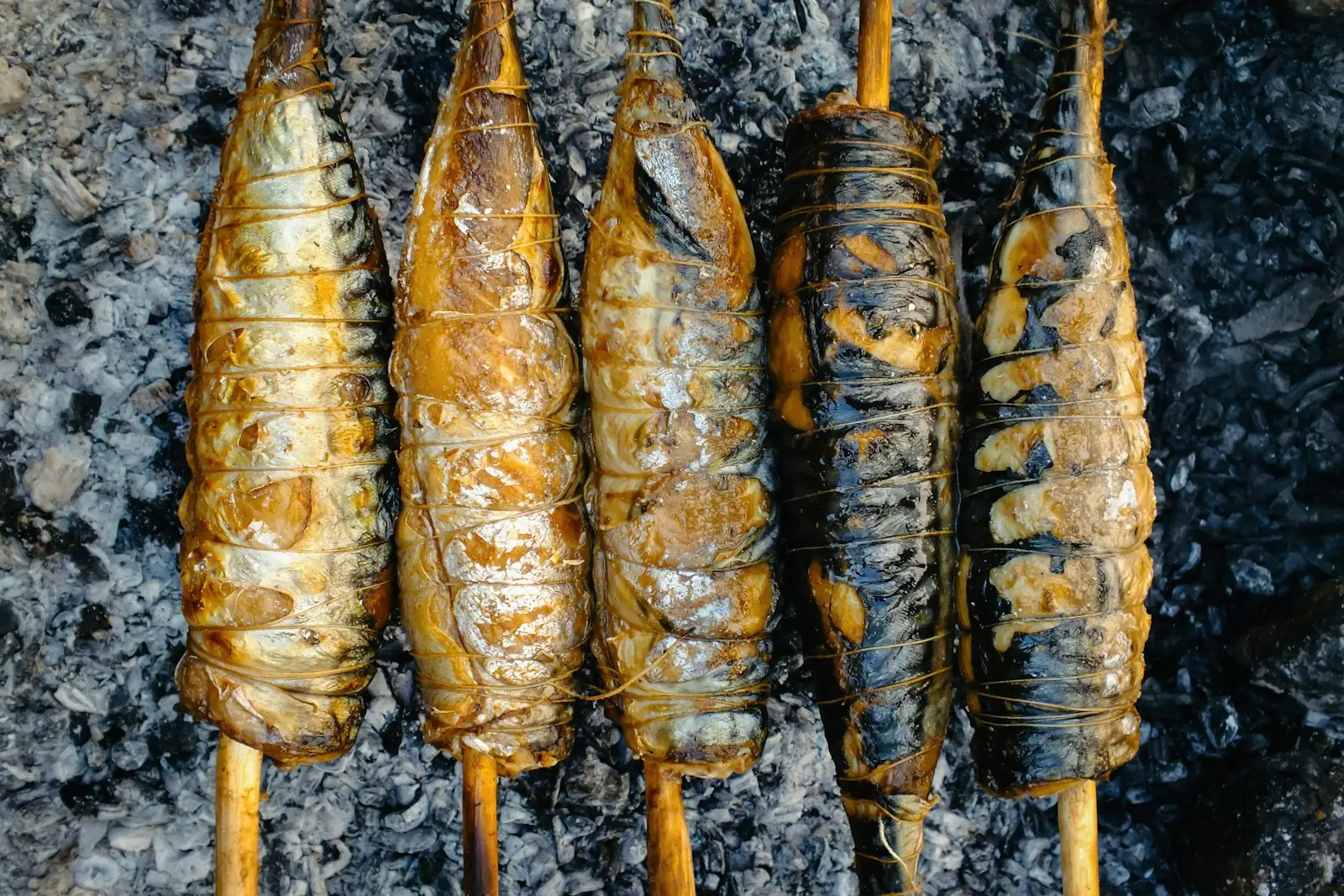
If Málaga has one defining dish, it is the espeto de sardinas: sardines skewered on a reed cane and grilled over a wood fire in a sand-filled boat turned grill, right on the beach. You eat them with your fingers.
And here is the piece of advice that makes the whole trip: the good espetos are not on the harbor promenade or at La Malagueta, the central beach. They are in Pedregalejo and El Palo, the old fishing neighborhoods about 4 km east of the center (bus 3 or 11, fifteen minutes).
There, at the timeless chiringuitos, you eat espetos as they were meant to be: at sunset, with the smoke rising from the boat-grill on the sand and the water lapping at your feet. The seafront promenade of Pedregalejo, lined with low fishermen's houses, is half the experience in itself. And as a bonus, those beaches are far quieter than the one in the center.
Season: espetos are at their best from May to September, when the sardines are at their peak. There is a local saying: the months without an "r" (May through August) are the sardine months.
6. The beach: urban and neighborhood
Málaga has a beach right in the city, but it pays to know which one suits you.
La Malagueta is the central beach, ten minutes on foot from everything. Convenient, with a promenade and chiringuitos, but it is the busiest and most urban of the lot. For a quick swim between sightseeing, it does the job perfectly.
Pedregalejo and El Palo (the espeto beaches) have a neighborhood feel: quieter, more authentic, and with the best fresh fish right next door.
For more serious beach time — coves, fine sand, clear water — you need to leave the city: head east toward Nerja and its surroundings, or west into the classic Costa del Sol. But for that you are already beyond Málaga city.
7. Eating well, beyond the espeto
Málaga's cuisine is Mediterranean, seafood-driven, and proudly fried.
What you must try: pescaíto frito (the Andalusian mixed fry: anchovies, red mullet, squid), boquerones (anchovies in vinegar or fried — the city's signature fish), gazpachuelo (a warm Málaga soup, deeply local), ensalada malagueña (salt cod, orange, and potato salad), and for dessert, anything made with Málaga's raisins and sweet wine.
Where to go: the Mercado de Atarazanas, a Modernist market with a spectacular stained-glass window, brings together fresh produce and tapas bars all under one roof. The historic center and the Soho have the highest concentration of bars. For fish, head to Pedregalejo.
To drink: Málaga sweet wine (made from Pedro Ximénez and Muscat grapes) is the local signature; it is served at the century-old bodegas in the center, a ritual unto itself.
8. When to go
Málaga is famous for its microclimate: it is one of the warmest cities in Europe and can be enjoyed almost year-round.
Spring (March–June) is ideal: pleasant warmth, the beach season beginning, and during Semana Santa the Holy Week processions rank among the most impressive in Spain (and pack the city).
Summer (July–August) means beach, intense heat, and peak tourism. The evenings, with the whole city out on the streets, are the highlight.
Autumn (September–November) keeps the sea warm and the crowds thin. An excellent time to visit, with espeto season still in full swing.
Winter (December–February) is mild — daytime temperatures rarely drop below 12–13 degrees — and ideal for exploring museums and the historic center without the crowds. Semana Santa and the Feria de Agosto are the two great annual events: spectacular, but expect the city to be completely full.
9. Day trips
Málaga makes an excellent base for the interior and the coast:
- Caminito del Rey (one hour away): the walkway suspended inside a gorge, once dubbed "the world's most dangerous path," now fully restored and safe. Tickets sell out fast: book well in advance. One of the best excursions in Andalusia.
- Ronda (with Setenil de las Bodegas): the town perched above the gorge, one of the most dramatic in Spain.
- Frigiliana and Nerja (heading east): a picture-perfect white village and the famous caves.
- Antequera and El Torcal: prehistoric dolmens and a unique karst landscape.
Where to stay in Málaga
To see Málaga properly, the historic center puts everything within walking distance; the Soho is the modern choice, right beside the port; Pedregalejo brings you closer to the best beaches and espetos, though a little further from the core. At Fee4Me we manage vacation rentals on the Mediterranean coast and throughout Andalusia, designed so that your stay works seamlessly from the first minute: a fully equipped kitchen, genuine living space, and direct communication throughout your trip. Check availability at houses.fee4me.com.
Experiences
Book your activities in Málaga
Curated experiences by GetYourGuide, our official partner.
Enable marketing cookies to view experiences.
Travel newsletter
Inspiration in your inbox, once a month.
Each month, a selection of destinations, local guides and tips from people who live there.