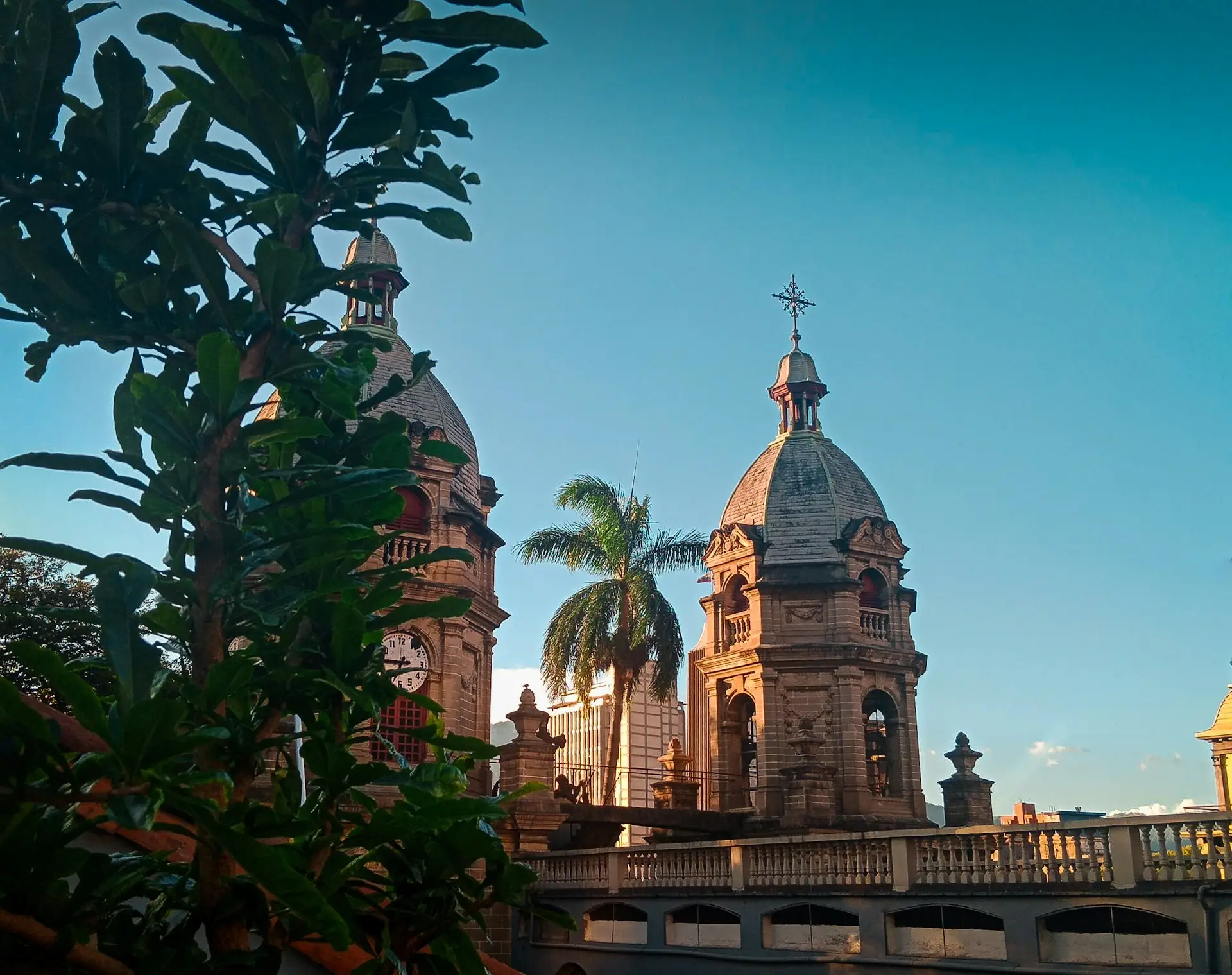
Medellín: the city that reinvented itself, without the usual clichés
How Medellín went from carrying the label of “the most dangerous city in the world” to becoming a model of urban transformation: social urbanism, the metrocable and the memory of Comuna 13, told without sensationalism.
↓There is an easy way to write about Medellín and an honest one. The easy way leans on the name everyone associates with the city, turns its past into a tourist draw and sells tours of a chapter the paisas have spent decades trying to close. The honest way tells a different story: how a city that bore the label of “the most dangerous in the world” became an international benchmark for urban transformation.
This is not a guide to what to see or where to stay. It is the story of that change: what was done, where it began, what wounds the journey left behind and why it is worth understanding before you visit the city.
The city that carried the worst label
Throughout the 1980s and 1990s, Medellín made headlines around the world for all the wrong reasons. Violence from drug trafficking, urban militias and, later, paramilitary groups made the city a byword for fear, and the label of “the most dangerous city in the world” stuck to it for years.
Telling this does not mean dwelling on it. The names from that era already fill far too many series and far too many tours; the victims, far fewer lines. What matters here is what came next: how a city decided that the answer could not be policing alone.
Social urbanism: starting with the hillsides
The idea that changed Medellín fits in a single sentence: bring the best of the city to the neighbourhoods that needed it most. Not to the centre or the well-off districts, but to the hillside comunas, the poorest and the hardest hit by violence. This way of thinking about public investment came to be known as social urbanism.
The starting point was the metro, opened in 1995: Colombia’s only metro, which the paisas look after with a civic pride that surprises visitors — spotless, not a scrap of litter. But the decisive step came later, with the metrocable: cable-car cabins integrated into the metro that climb up to the hillside comunas. For those living up there, getting down to the city stopped being a one- or two-hour odyssey and became a matter of minutes.
That is why the metrocable is not just transport: it is the symbol. Other pieces of the same plan came with it, such as the library parks (parques biblioteca), ambitious works of architecture built precisely in the neighbourhoods the city had forgotten. The message was clear: the very best, first for those who had least.
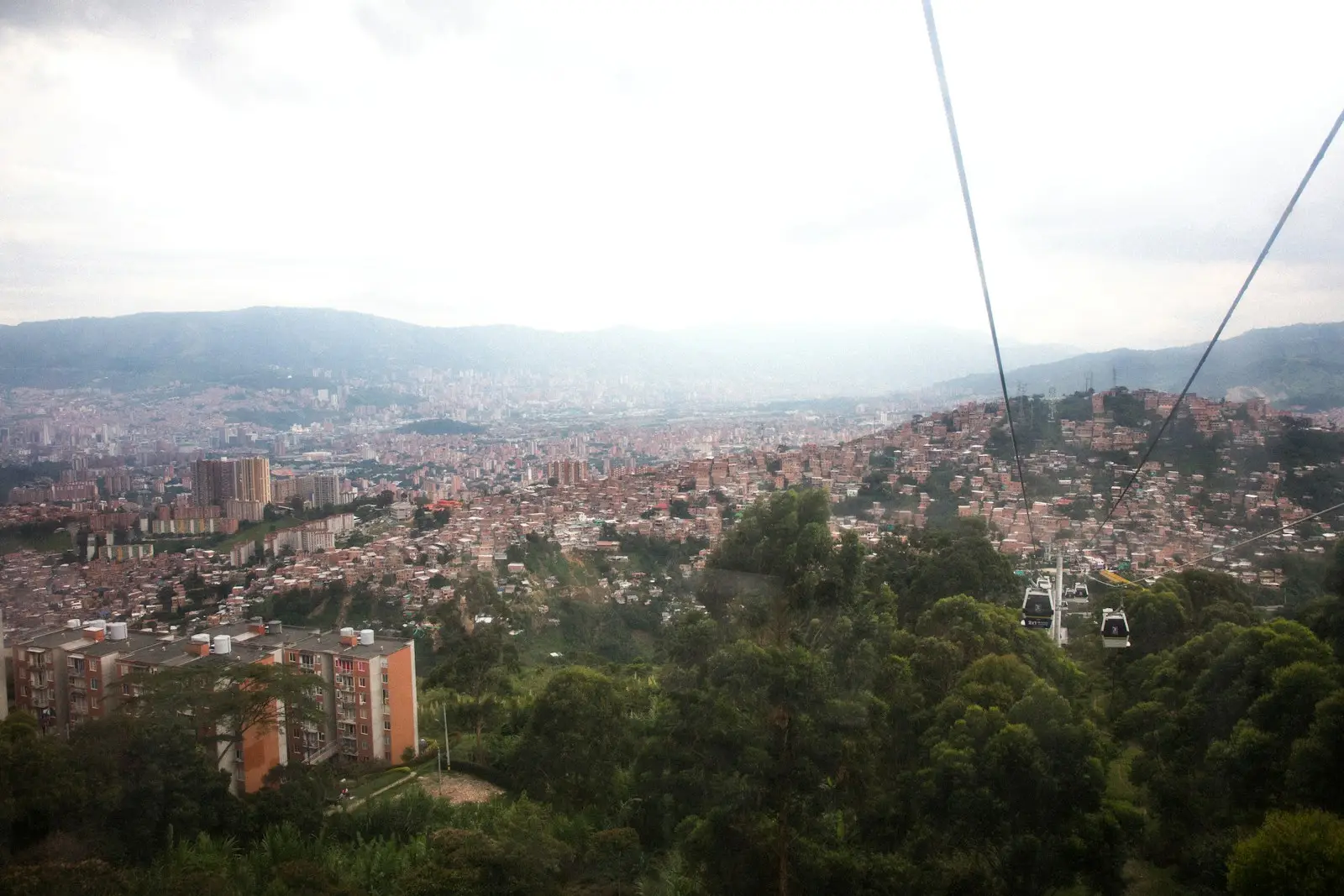
"You don't visit Medellín to see what it was, but to understand how it changed. And that change is best experienced from a cable car."
Medellín · Fee4MeComuna 13: memory before the postcard
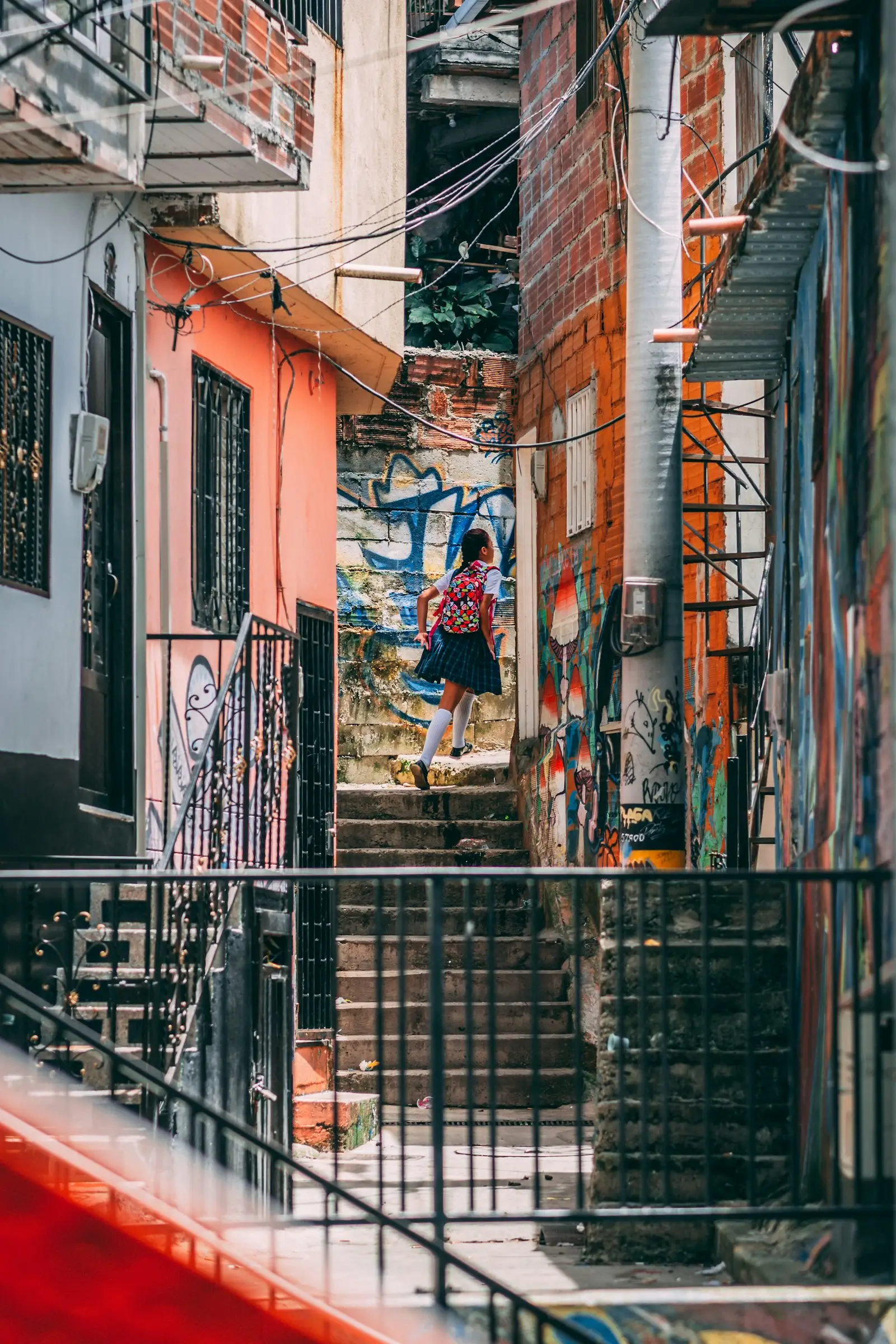
Comuna 13 (San Javier) is today the image of Medellín’s transformation: steep hillsides covered in street art, open-air escalators and music in the streets. But that postcard only makes sense if you know where it comes from.
The past, unvarnished. In the early 2000s, Comuna 13 was one of the neighbourhoods hardest hit by the conflict, caught between militias, paramilitaries and the State. In October 2002, Operación Orión — the largest urban military operation of the Colombian conflict — moved into the heart of this residential neighbourhood to retake control. It left disappearances and wounds the neighbourhood still remembers, and families who are still searching for answers. This is not an awkward detail to hide: it is part of what the murals tell.
The change. From there, the community rewrote its story through art: first came graffiti, then murals and then an entire movement of hip-hop and culture. In 2011 the escalators arrived, connecting these hillsides with the rest of the city and becoming the symbol that, for these people, access meant dignity.
An honest note: some critics argue that the escalators and tourism built a narrative of “overcoming” that invites people to forget what happened. Visiting Comuna 13 with that awareness — celebrating the change without erasing the wound — is the fairest way to do it. For context, the best stop is the Museo Casa de la Memoria, dedicated to the victims of the conflict, with free entry.
Proof that the change is real (and what is still missing)
Medellín’s transformation is not a slogan: it shows in the figures. Homicides keep falling year after year, and the city that once led the news bulletins for its violence is now studied at international urban planning forums.
But telling it without triumphalism is also part of being honest. Medellín is still a big city with inequality, with neighbourhoods where change arrived later or only halfway, and with new tensions brought by its very success as a tourist destination. The reinvention is not a closed chapter: it is a process still under way.
Eternal spring and the paisa character
All of this takes place in a remarkable setting. Medellín lies in the Valle de Aburrá, at around 1,500 metres above sea level and surrounded by green mountains, with a mild, stable climate all year round. Hence its nickname, the city of eternal spring, which is not marketing: it is literal.
And then there are its people. It is home to the paisas, known throughout the country for their warmth, their sing-song accent and their work ethic. That same character — proud, entrepreneurial, attached to what is theirs — goes a long way to explaining why the city refused to keep the label it was given.
Visiting today, with respect
Understanding this story changes the way you explore the city. Riding the metrocable stops being an attraction and becomes a lesson in urban planning; walking Comuna 13 with a guide from the neighbourhood itself — and buying from its stalls — is how tourism can give something back to those who lived through the worst.
If, after understanding where Medellín comes from, you want to plan your visit — what to see, where to stay and how to get around — you’ll find it all in our Medellín guide.
Experiences
Book your activities in Medellín
Curated experiences by GetYourGuide, our official partner.
Things to do in Medellín
Tours, guided visits and experiences, powered by GetYourGuide.
This will load content from GetYourGuide.
Travel newsletter
Inspiration in your inbox, once a month.
Each month, a selection of destinations, local guides and tips from people who live there.