Medellín guide: what to see, where to stay and how to get around
The city of eternal spring: Comuna 13, the metrocable, El Poblado and the day trip to Guatapé.
There's an easy way to tell the story of Medellín —the same old cliché— and an honest one. This guide takes the honest route: what to see, how to get around, which neighbourhood to stay in and how to understand Comuna 13 without voyeurism. Because the real story of the city that reinvented itself is far more interesting than the cliché.
The city of eternal spring
Medellín sits in the Valle de Aburrá, some 1,500 metres above sea level and surrounded by green mountains. That altitude gives it its greatest gift: spring-like weather all year round, mild and steady —cool in the early hours, warm at midday, rarely outside 16-28 degrees— with no marked seasons. Hence the nickname: the city of eternal spring.
It's Colombia's second city and the capital of Antioquia, home of the paisas, known throughout the country for their warmth, their sing-song accent and their work ethic. To get your bearings: the centre is the historic, dense, everyday Medellín; El Poblado is the modern area of hotels, restaurants and nightlife where almost all visitors stay; Laureles is the leafy residential neighbourhood recommended by those who know the city.
"The real story of the city that reinvented itself is far more interesting than the cliché."
The metro and the metrocable: not just transport, but the symbol
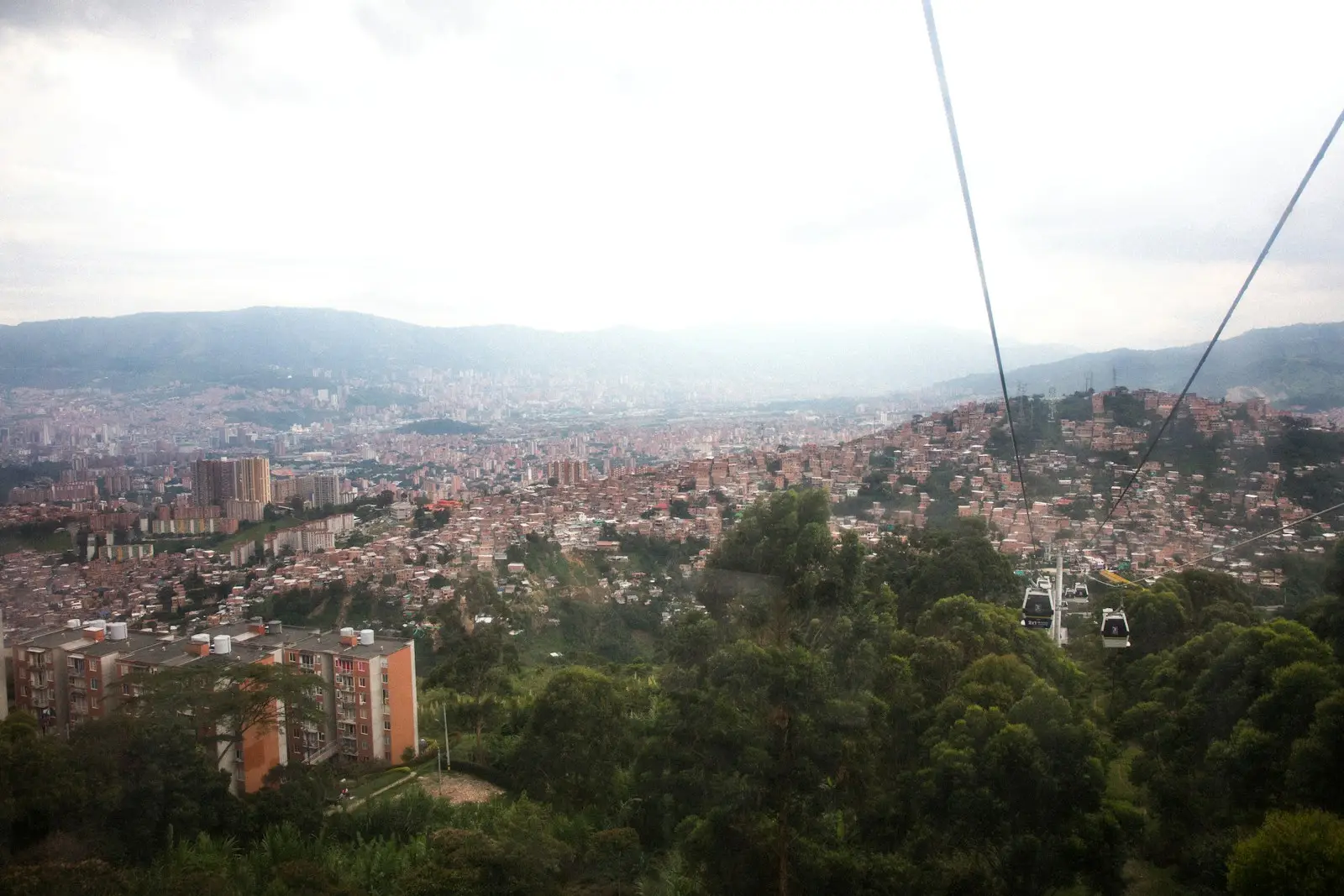
To understand Medellín you have to ride its metro, and not for convenience: the transport system is the transformation itself. Medellín has Colombia's only metro (1995), which the paisas look after with civic pride: spotless, not a scrap of litter. The revolutionary step was taking transport up the hillsides with the metrocable, the cable cars that link the upper comunas with the rest of the city.
Before, living at the top of a comuna meant one or two hours to get down; the metrocable turned that into minutes, and with it came investment, libraries and safety. For travellers: take Line K or Line L and ride it all the way up —the views over the valley are spectacular—; Line L continues to Parque Arví, a huge forest high above the city (note: separate fare, and it's closed on Tuesdays). Practical tip: the personal Cívica card is free —you get it with your passport at metro service points— and makes every journey cheaper; if you're only in town for a few days, a single-journey ticket works too.
Comuna 13: how to visit with respect
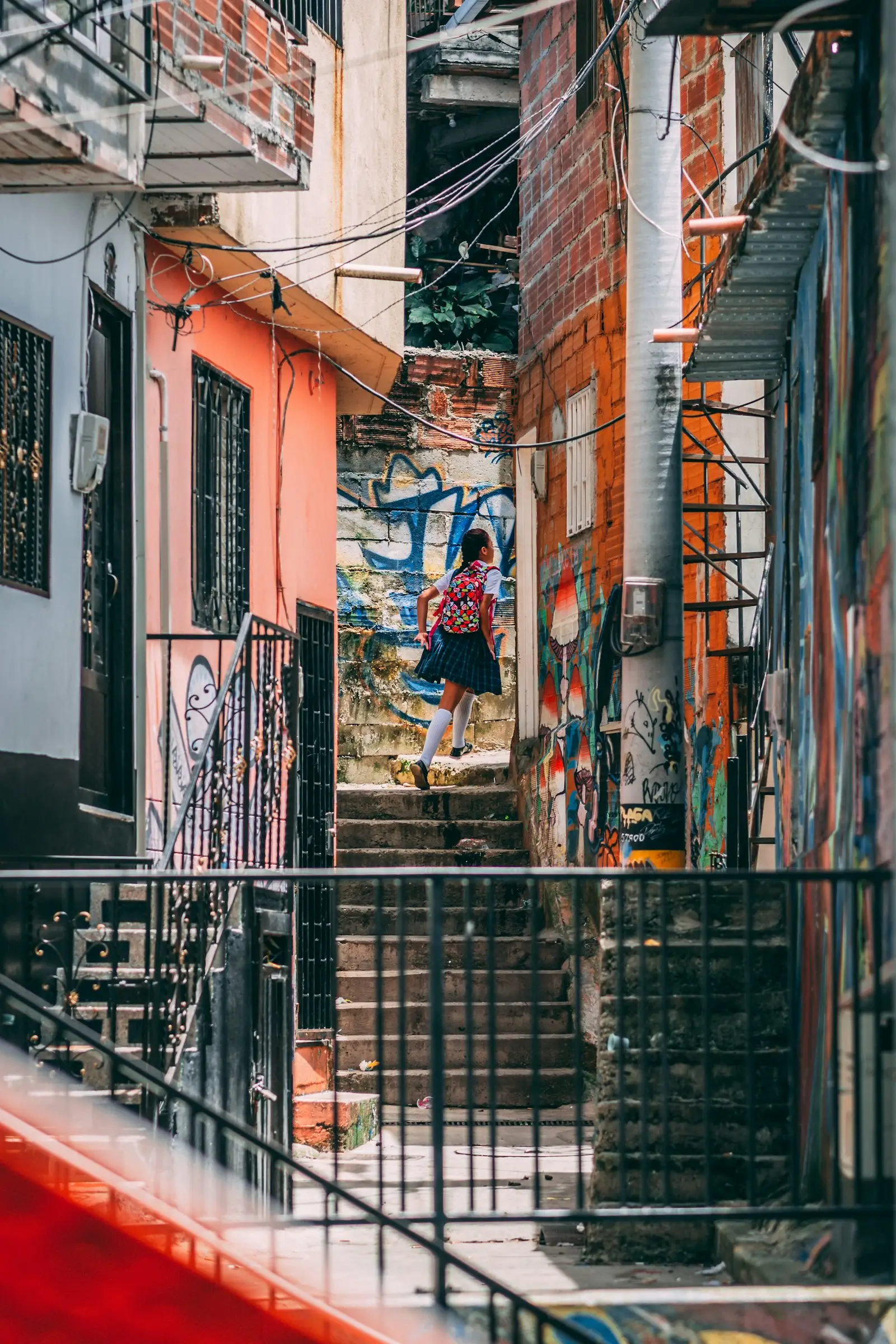
Comuna 13 (San Javier) is today the worldwide symbol of Medellín's transformation: steep hillsides covered in street art, open-air escalators and music in the streets. But it's worth arriving knowing what happened here. In the early 2000s it was one of the neighbourhoods hit hardest by the conflict; in October 2002 it lived through Operación Orión, the largest urban military operation of the Colombian conflict, which left disappearances and wounds the neighbourhood still remembers. From then on the community rewrote its story through art —first graffiti, then murals, then a whole hip-hop and cultural movement— and in 2011 the escalators arrived, connecting it with the rest of the city.
How to visit today: the Graffitour is the walk through the murals, led by people from the neighbourhood itself who tell the story behind each one. Do it with a local guide (without the story, the murals are just pretty pictures, and this way the money stays in the community); walk the signposted route; and go in the morning, when it's cooler and less crowded. Treat it with respect: it's a neighbourhood where people live, not a theme park —ask before taking photos and buy from the local stalls—. To understand the context, before or after, the best stop is the Museo Casa de la Memoria (free entry).
The story of how Medellín reinvented itself deserves more than a paragraph; we tell it in this feature.
The centre: Botero, brick and paisa life
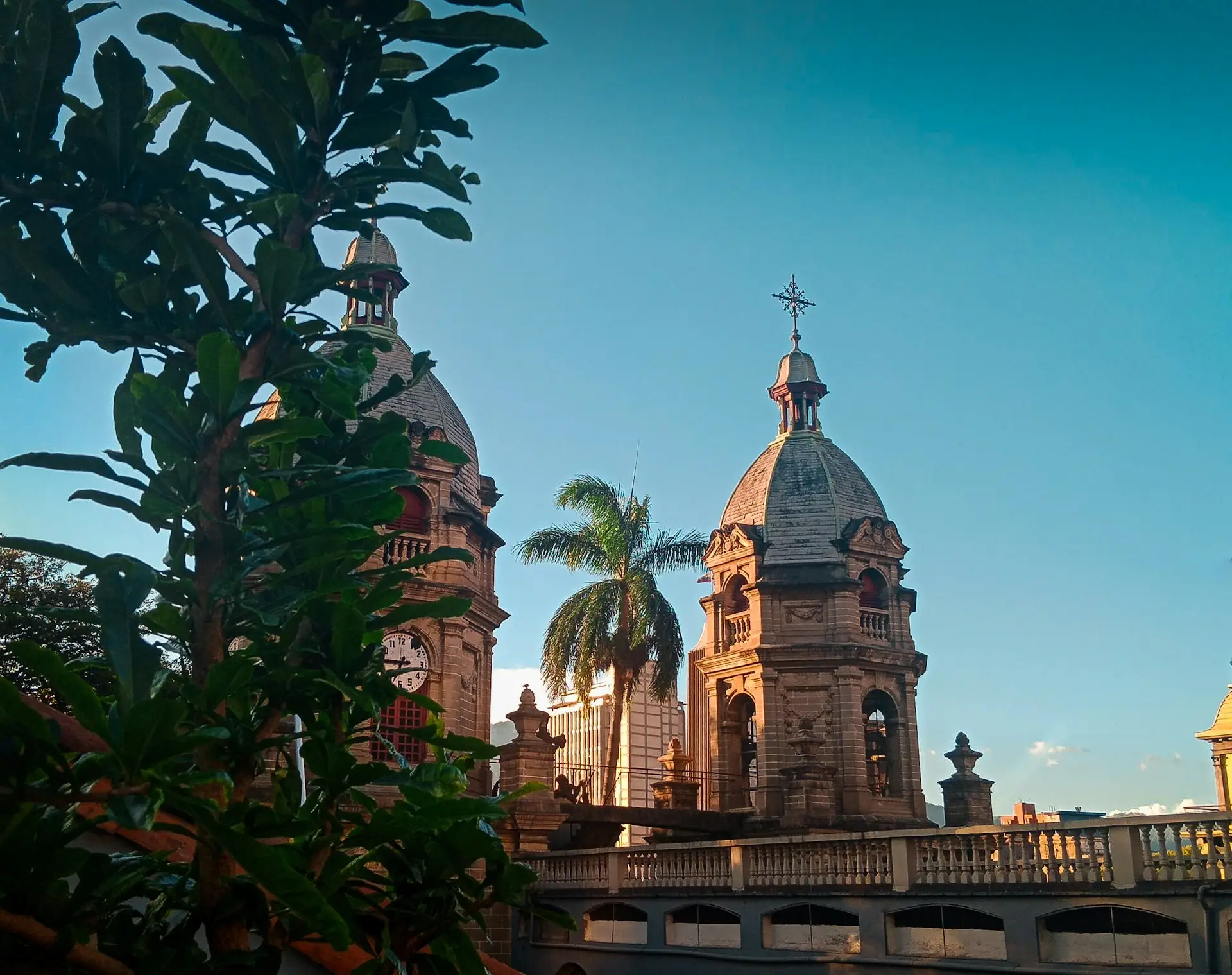
The centre is dense, chaotic and authentic: not the most comfortable part of town, but the most alive. Plaza Botero is the city's open-air museum: 23 monumental bronze sculptures by Fernando Botero, the most universal of paisas, who donated them to Medellín. Next door are the Museo de Antioquia (with the largest collection of Botero's work) and the Palacio de la Cultura Rafael Uribe Uribe, a neo-Gothic building with black and white stripes.
To see the real Medellín, head to the market halls such as the Minorista: tropical fruit you've never heard of, fresh juices and the bandeja paisa —beans, rice, meat, chicharrón, egg, plantain—, the region's monumental dish (so huge it can be shared). A word of warning: the centre is best seen by day; at night, as in any big-city centre, it's better to get around by taxi.
El Poblado and Laureles: where life happens
El Poblado is modern Medellín: hotels, restaurants, speciality coffee shops and nightlife around Provenza street and Parque Lleras. It's convenient and where almost all visitors stay, but also the most expensive and touristy area.
Laureles is the alternative recommended by those who know the city: a flat, leafy, walkable neighbourhood with real street life, more reasonable prices and the buzz of La 70. Next to it is Envigado, even quieter and more local, a good option for longer stays. And one more thing: Medellín is one of Colombia's capitals of speciality coffee —El Poblado and Laureles are full of roasters where you can finally drink the country's good coffee—.
Guatapé and the Piedra: the unmissable day trip
About two hours from Medellín lies one of the best day trips in Colombia. La Piedra del Peñol is a monolith over 200 metres tall rising beside a reservoir; you climb its 740 steps up a staircase set into a crack in the rock, and the view from the top over the water and the islands is one of the most famous in the country.
Guatapé, the town, is the most colourful in Colombia: its houses are decorated with zócalos —painted reliefs along the lower part of the façades— in vivid colours, each with its own motif. How to get there: on an organised tour, by public bus (from the Terminal del Norte) or by car; it can be done in a day, although staying one night lets you climb the Piedra first thing, without the tour crowds.

When to go
Thanks to its eternal spring, Medellín can be enjoyed all year round: always mild, with no bad season weather-wise. There is a rainy season (most marked from late March to June, and from September to November), but rain usually comes as afternoon showers rather than whole days: plan outdoor activities for the morning, pack a light rain jacket and carry on with your plans.
If you can time it right, the Feria de las Flores —from late July to the first days of August— is the city's big festival, with the famous Desfile de Silleteros (farmers carrying enormous flower arrangements on their backs, part of the region's cultural heritage), concerts and a festive atmosphere all over Medellín. It's the best time to experience the city, but also the busiest: book well in advance.
Getting there, getting around and safety
Getting there: international flights land at José María Córdova airport, in Rionegro, about 35 km from the city (the road crosses the mountain through the Oriente tunnel); the official bus to the centre costs around 20,000 COP and there are fixed-fare taxis. The small Olaya Herrera airport, inside the city, handles domestic flights —including Bucaramanga, in case you're combining destinations—.
Getting around: metro + metrocable with the Cívica card for the main routes, and taxi or apps for everything else (especially at night). The centre by day; El Poblado and Laureles are the most comfortable areas to stay in and walk around.
Safety, without scaremongering: Medellín has improved enormously —homicides keep falling year after year—, but it's still a big city: use common sense (not "dar papaya" —not giving anyone an opening—, as the paisas say), don't flash your phone in the street and use a taxi or app late at night. The real risk for travellers isn't the one in the cliché, but robberies involving scopolamine linked to nightlife and dating apps: don't accept drinks or food from strangers, never leave your glass unattended and don't bring people you've just met back to your accommodation. With that in mind, it's a friendly city that loves to enjoy itself.
Fee4Me in Colombia
At Fee4Me we manage vacation rental homes in Colombia and we're growing our portfolio across the country. Right now we don't have any homes in Medellín —we do in Bucaramanga, and we keep adding properties month by month—, which is why this guide doesn't recommend any of our own accommodation: we'd rather not sell you what we don't manage yet. If you own a property in Medellín or anywhere else in Colombia and are thinking of letting it as a vacation rental with professional management, that's a conversation we'd be delighted to have.
Medellín in three days
Day 1
Comuna 13 with a local guide (Graffitour) in the morning.
City centre: Plaza Botero, Museo de Antioquia and Palacio de la Cultura; bandeja paisa at a market hall (by day).
Day 2
Metrocable Line L up to Parque Arví and views over the valley (not on Tuesdays: it's closed).
El Poblado (Provenza) or Laureles (La 70): speciality coffee and street life.
Day 3
Day trip to Guatapé and the Piedra del Peñol (740 steps).
Head back; sunset at a viewpoint over the valley.
The unmissable day trip
Guatapé and the Piedra del Peñol (2 h) is the day trip you shouldn't miss: a monolith over 200 m tall with its 740 steps, and the most colourful town in Colombia.
Practical tips
The personal Cívica card is free with your passport and makes the metro and metrocable cheaper.
Visit Comuna 13 always with a local guide and along the signposted route.
The metrocable to Parque Arví (Line L) is closed on Tuesdays and has a separate fare.
See the city centre by day; at night, get around by taxi or app.
Watch out for scopolamine in the nightlife: never accept drinks from strangers.
ACCOMMODATION IN COLOMBIA
Explore our properties in Colombia
We don't manage homes in Medellín yet, but we do elsewhere in Colombia. Browse the full catalogue and book direct, with no commission fees and with Fee4Me's support throughout your stay.
Explore stays in Colombia BucaramangaRead guide
 BogotáComing soon
 CaliComing soon
 BaricharaComing soon
 SalentoComing soon
 FilandiaComing soon