Medellín: the city that reinvented itself, without the usual clichés
What to see in Medellín: Comuna 13, the metrocable, El Poblado, and Guatapé. The story of a transformation told with honesty and respect, free of sensationalism.
There is an easy way to write about Medellín, and there is an honest one. The easy way leans on the name everyone associates with the city, turns its past into a tourist selling point, and packages tours around a chapter that the paisas have spent decades trying to close. The honest way tells a different story: how a city that in 1991 had the highest homicide rate in the world became an international benchmark for urban innovation — and how that transformation can be seen, walked, and ridden by cable car.
This article takes the honest route. What to see in Medellín, how to get around, which neighborhoods to choose, and how to experience Comuna 13 without falling into voyeurism. Because the real story of this city is far more compelling than the cliché.
3 daysIDEAL DURATION
2011THE COMUNA 13 ESCALATORS
EternalSPRING WEATHER (68–82°F YEAR-ROUND)
MetrocableTHE METRO THAT CLIMBS TO THE COMUNAS
1. The city of eternal spring
Medellín sits in a valley — the Valle de Aburrá — at 1,500 meters above sea level, wrapped on all sides by green mountains. That altitude is the city's great gift: a spring-like climate year-round, with temperatures between 20 and 28°C and no seasons to speak of. Hence the nickname, "the city of eternal spring" — and it is no marketing slogan; it is the literal truth.
It is Colombia's second city, the capital of Antioquia, and home to the paisas — the Antioquians — known throughout the country for their warmth, their melodic accent, and their work ethic. That warmth is, for almost everyone who visits, the thing they remember most.
A quick orientation: the centro (historic, dense, the everyday Medellín), El Poblado (the modern district of hotels, restaurants, and nightlife, where most tourists stay), Laureles (residential, more local and authentic), and the comunas climbing the hillsides — among them, Comuna 13. The metro — Colombia's only one — and the metrocable connect them all.
2. The metro and the metrocable: more than transport, a symbol
To understand Medellín, you have to ride its metro. Not for the convenience — but because the transit system is the transformation itself.
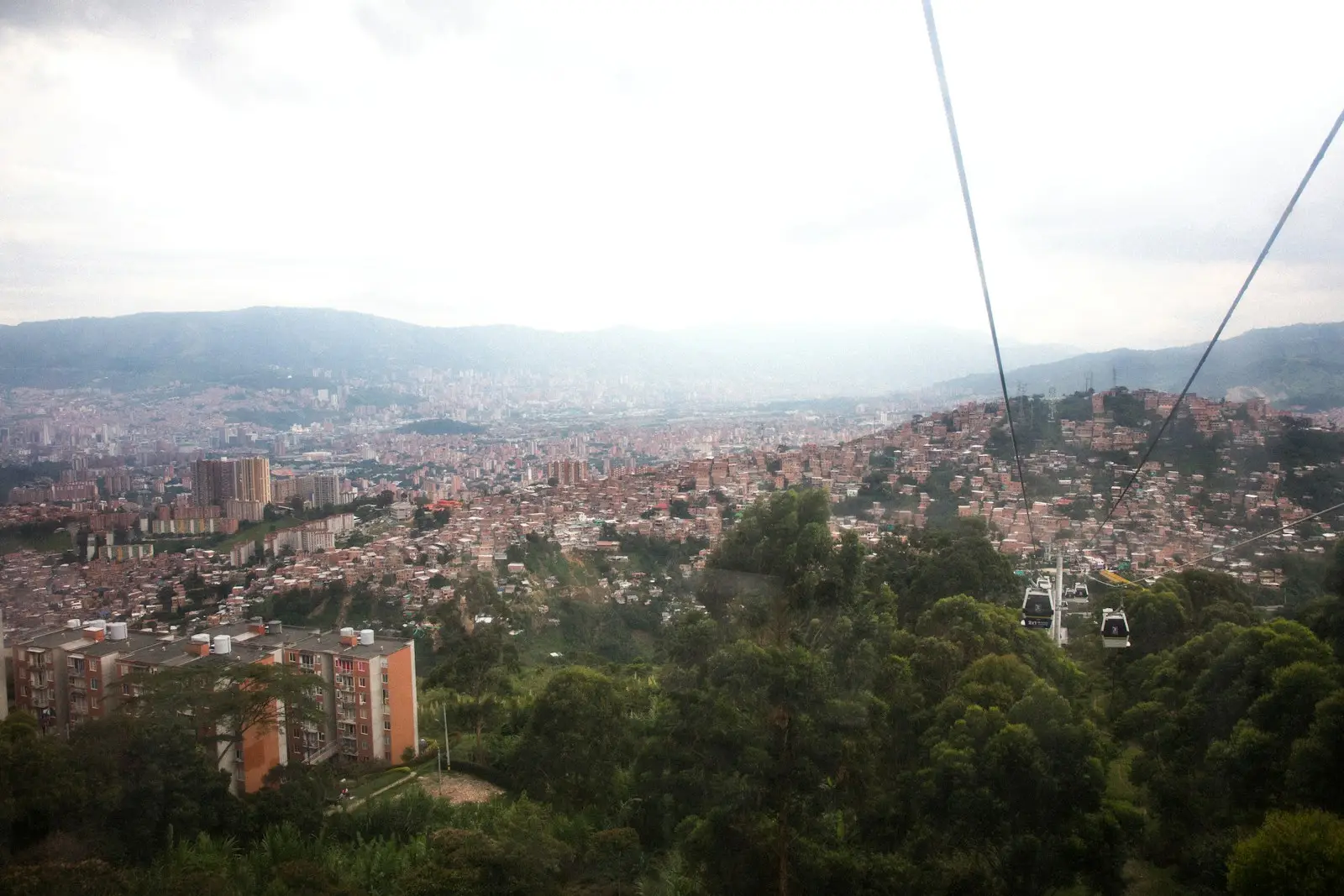
Medellín has Colombia's only metro, inaugurated in 1995, and the paisas maintain it with a civic pride that genuinely surprises: it is immaculate, no one litters, it functions almost as a point of collective honor. But the truly revolutionary step came later: the metrocable, a gondola system integrated into the metro network that reaches the hillside neighborhoods.
Before it existed, living high up in one of the comunas meant one or two hours to descend into the city. The metrocable turned that journey into minutes, and with it came everything else: investment, libraries, security, dignity. It was among the first systems in the world to use a gondola lift as urban public transit, and today cities across the globe are following its lead.
For the traveler: take line K or line L of the metrocable and ride it all the way up. The views over the valley are spectacular, and in one glide you understand how the entire city is structured. Line L continues to Parque Arví, a vast forest at the top of the mountain — the contrast of moving from dense urban sprawl to ancient woodland in a single cable-car ride is an experience in its own right.
Practical tip: buy a Cívica card — the integrated pass for the whole system — and use it for both the metro and the metrocable. It works out considerably cheaper than single tickets.
"You don't visit Medellín to see what it was, but to understand how it changed. And that change is best experienced from a cable car."
Medellín · Fee4Me
3. Comuna 13: how to visit it with respect
This is the heart of the article — and the point where it is easiest to get things wrong.
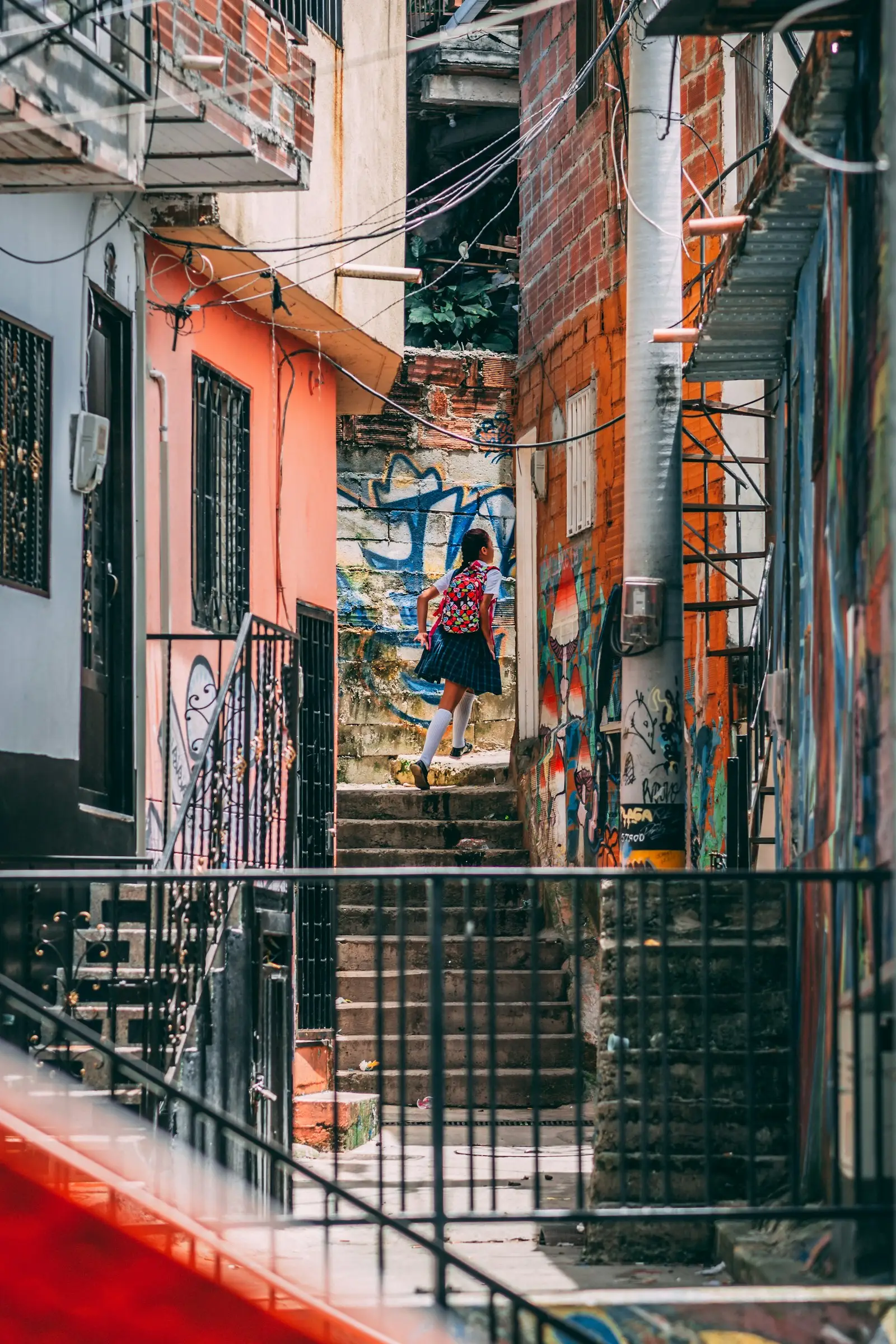
Comuna 13 (San Javier) is today the world's most visible symbol of Medellín's transformation: a neighborhood of steep hillsides covered in street art, with open-air escalators and music spilling into the streets. But to understand why it moves people, you have to know where it comes from — and tell that story honestly.
The past, without varnish. From the 1980s through the early 2000s, Comuna 13 was one of the most violent areas in Medellín, trapped among guerrillas, paramilitaries, and the state. In October 2002, Operación Orión — a massive military operation carried out in the middle of a residential neighborhood — sought to retake control of the area. It reduced the militias' presence, but left behind a complex legacy of human rights violations: according to victims' groups, more than 90 people were forcibly disappeared, and families are still demanding justice today. This is not an uncomfortable detail to be glossed over; it is part of what the murals are saying.
The change. From that point on, the community — exhausted by decades of violence — began rewriting its story through art. First came small graffiti; then murals; then a movement. In 2011, the electric escalators arrived: six open-air flights — the equivalent of 24 stories — connecting neighborhoods where people had previously climbed more than 350 steps on foot, now covered in under two minutes. Among the first of their kind in the world in a vulnerable urban environment, they became the symbol that access, for these people, was dignity.
How to visit today. The Graffitour is the route: a marked trail through the murals, guided by people from the neighborhood itself, who tell the stories behind each one. There is hip-hop, breakdancing, food stalls, ice-cream shops, viewpoints. Color floods everything.
Go with a local guide, ideally someone from the neighborhood. It is not just safer — without the narrative, the murals are just pretty pictures. With it, you understand what they represent.
Walk the Graffitour route, which is clearly marked and constitutes the safe zone. Do not venture into side streets outside the designated path.
Go in the morning to avoid the heat and the largest crowds; the sunset from the upper viewpoint is spectacular for photography.
Respect: this is a neighborhood where people live, not a theme park. Ask permission before photographing anyone, and spend your money at the local stalls — tourism is now part of the community's economy.
An honest note: some critics argue that the escalators and the tourism industry have built a narrative of "overcoming" that invites people to forget what happened. To visit with that awareness — celebrating the change without erasing the wound — is the most honest way to be there.
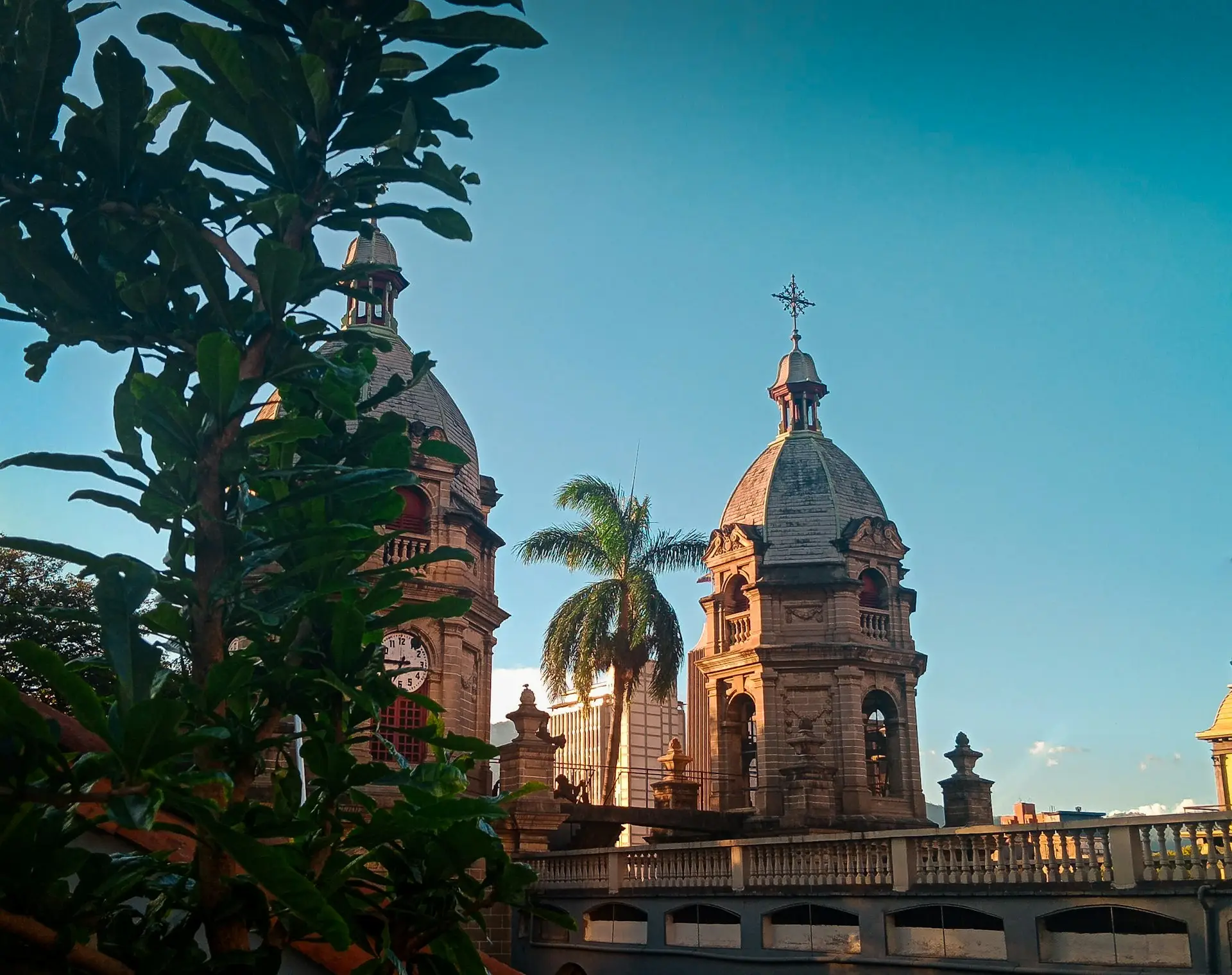
4. The centro: Botero, brick, and everyday paisa life
Medellín's centro is dense, chaotic, and utterly authentic. It is not the most comfortable part of the city, but it is the most alive.
Plaza Botero. Medellín's open-air museum: 23 monumental bronze sculptures by Fernando Botero, the city's most universal son, donated by the artist to his hometown. His rounded, voluminous figures have become icons of the city. Beside the plaza, the Museo de Antioquia holds more of his work.
The Palacio de la Cultura Rafael Uribe Uribe. A spectacular neo-Gothic building striped in black and white, presiding over the surrounding streets.
Plaza Minorista and the market halls. The place to eat and witness real Medellín: tropical fruits you have never seen, fresh juices, and the bandeja paisa — the region's monumental platter of beans, rice, beef, chicharrón, egg, plantain, avocado, and arepa, all on a single plate.
A word of caution: the centro is best explored during the day. At night, as in any major city center, stick to taxis.
5. El Poblado and Laureles: where life pulses
El Poblado is modern Medellín: the district of hotels, restaurants, specialty coffee shops, and nightlife, concentrated around Calle Provenza and Parque Lleras. It is where almost all tourism is based — comfortable, safe, and home to the city's highest density of excellent dining. It is also the most expensive and the least "Colombian" part of the city; at times it feels like an international bubble.
Laureles is the alternative recommended by those who really know the city: a leafy residential neighborhood with genuine street life, more reasonable prices, and the energy of La 70, an avenue of bars and restaurants where locals actually go out. If you want a less tourist-heavy Medellín without sacrificing comfort, this is your spot.
Specialty coffee: Medellín is one of Colombia's specialty coffee capitals. El Poblado and Laureles are full of roasters and cafés where you can finally drink the country's finest cup.
6. Guatapé and la Piedra: the unmissable day trip
Two hours from Medellín lies one of Colombia's finest day trips: Guatapé and La Piedra del Peñol.
La Piedra del Peñol is a 200-meter monolith that rises from nowhere beside a vast reservoir. You climb its 740 steps via a staircase wedged into a crack in the rock face, and from the summit the view over the reservoir — scattered with green islands and peninsulas — is, without exaggeration, among the most breathtaking in the country.
Guatapé, the town itself, is Colombia's most colorful: its houses are decorated with zócalos — painted relief panels along the lower section of each facade — in vivid hues, every one with its own motif. Walking its streets is a festival of color.
How to get there: by organized tour, by public transport (buses from the Terminal Norte), or by car. It works perfectly as a day trip, though spending a night allows you to see it without the crowds.
7. When to go
Thanks to the eternal spring, Medellín is a pleasure year-round: temperatures always between 20 and 28°C. There is no bad season in terms of weather.
There is a rainy season (more pronounced around April–May and September–November), but it typically means afternoon downpours rather than full days of rain. Pack a light waterproof and carry on with your plans.
If you can time it right: the Feria de las Flores (early August) is Medellín's great annual festival, featuring the famous desfile de silleteros — campesinos carrying enormous floral arrangements on their backs through the streets — alongside concerts and the whole city out celebrating. It is spectacular, but the city fills up and prices rise. Christmas (the Alumbrados of December) lines the river and the entire city with lights; it is one of the most famous Christmas illuminations in Latin America.
8. Getting around and safety
The metro and the metrocable are the best way to move around: clean, cheap, safe, and scenic. The Cívica card covers both.
Taxis and ride-hailing apps work well and are the right choice at night or in the centro after dark.
On safety, honestly: Medellín is today a well-established tourist destination and safe in its usual areas (El Poblado, Laureles, the marked route through Comuna 13, and the centro by day). It is still a large city with deep inequality, so common sense applies — do not flash valuables, do not "dar papaya" (the local expression for needlessly exposing yourself to risk: keep your phone out of sight, avoid unfamiliar areas alone, take taxis at night). With those precautions, the vast majority of visitors experience no problems whatsoever.
9. Day trips and surroundings
Beyond Guatapé, Antioquia holds more treasures: Santa Fe de Antioquia (one hour away) is a colonial town of cobbled streets and whitewashed houses, the region's former capital. Jardín (three hours) is one of Colombia's most beautiful towns — coffee-growing, unhurried, and still relatively undiscovered. Jericó, another picture-perfect paisa village, is the birthplace of Colombia's only canonized saint. The Oriente antioqueño (the area around Guatapé) is rich in reservoirs and natural landscapes.
Where to stay
In Medellín, the neighborhood shapes the entire experience: El Poblado is convenient, safe, and surrounded by restaurants and nightlife — ideal for a first visit. Laureles is more local, more relaxed, and more affordable, with genuine neighborhood life. Both are well connected by metro. At Fee4Me we manage vacation rentals in Colombia and are actively growing our portfolio in the country. We do not currently have properties in Medellín; we do have homes in Bucaramanga, and we continue to add new listings. When we have properties in the city, we will say so right here. If you own a property in Colombia and are considering putting it on the vacation rental market, let's talk.
Yes, in its established tourist areas: El Poblado, Laureles, the marked route through Comuna 13, and the centro by day. Medellín has become a well-developed tourist destination. It is still a large city with significant inequality, so common sense is advisable — avoid displaying valuables, take taxis at night, and stick to the known tourist routes. With those precautions, the overwhelming majority of visitors have no issues at all.
The best way is to do the Graffitour — the marked trail through the murals — with a local guide, ideally someone from the neighborhood, who explains the stories behind the art. You get there by metro (line B to San Javier). Go in the morning, stay on the tourist route, and treat the place with respect: people live here; it is not a theme park. Spending at local stalls directly supports the community.
Because of its climate. Set in a valley at 1,500 meters above sea level, it enjoys mild, stable temperatures year-round — between 20 and 28°C — with no distinct seasons. It is not a slogan; it is something you feel the moment you arrive.
Three days strike a good balance: one for the centro (Plaza Botero) and the viewpoints, one for Comuna 13 and the metrocable up to Parque Arví, and a full day for the excursion to Guatapé and La Piedra del Peñol. A fourth day lets you explore neighborhoods like Laureles or a nearby town such as Jardín.
Absolutely. It is 740 steps up a staircase embedded in the rock, but the view from the top — over a reservoir dotted with green islands — is among the most spectacular in Colombia. It pairs perfectly with the town of Guatapé, the most colorful in the country, making for an outstanding day trip from Medellín.
Experiences
Book your activities in Medellín
Curated experiences by GetYourGuide, our official partner.