Valencia: the city where the river is a park and the beach is in town
What to see in Valencia without the stress: from El Carmen to the Ciudad de las Artes, the Albufera and the urban beaches. With neighborhoods, opening hours and everything you need to know.
Valencia has a peculiarity that defines it: its river is no longer a river. It is a nine-kilometer park that runs through the entire city, and along it you can walk or cycle from the medieval old town all the way to a complex of buildings that look like spaceships. In between, a cathedral that claims to hold the Holy Grail and a Modernist market where locals do their daily shopping.
Spain's third-largest city is Mediterranean, flat and free of Barcelona's crowds. You can explore it on foot and by bicycle, it has a genuine urban beach, and some of the world's finest paellas are served ten minutes from the center. This guide is about making the most of it: what to see, which neighborhoods to explore, when to go and what to know before you arrive.
9 kmOf parkland along the river
2–3 daysIdeal length of stay
1957The year the river was diverted
20 minFrom the center to the sea
1. The Turia: understanding the city starts here
To understand Valencia, you need to understand its river — the one that no longer carries water.
In 1957, a catastrophic flood of the Turia devastated the city. The solution was radical: the entire river was rerouted around the outskirts, and the old riverbed — which crosses Valencia from end to end — was transformed into a nine-kilometer linear park. The Jardines del Turia are today the city's green spine: where water once flowed, there are now pine trees, orange groves, football pitches, the Palau de la Música and cycling paths connecting the old town with the sea.
The practical upshot for visitors: the Turia is your axis. Rent a bike and ride the whole length of it, from the historic center to the Ciudad de las Artes, without touching a single car-filled street. It is the best — and least tiring — way to experience Valencia.
One thing worth clarifying: in October 2024, a DANA storm system caused a catastrophe in the Valencia metropolitan area. The city itself suffered no structural damage — thanks precisely to that 1957 diversion — and is fully operational: transport, museums, beaches and cultural events are all open. The affected areas lie outside the urban core. We mention it because it is worth knowing, not because it changes your visit to the city.
2. The old town: Valencia in stone
The historic center — Ciutat Vella — is medieval, walkable and can be covered in a long morning.
The Cathedral and the Miguelete. The cathedral blends Romanesque, Gothic and Baroque, and houses what is claimed to be the Holy Grail — the chalice tradition places at the Last Supper. Climb the Miguelete, its octagonal bell tower: 207 spiral steps and the finest view over the city's rooftops.
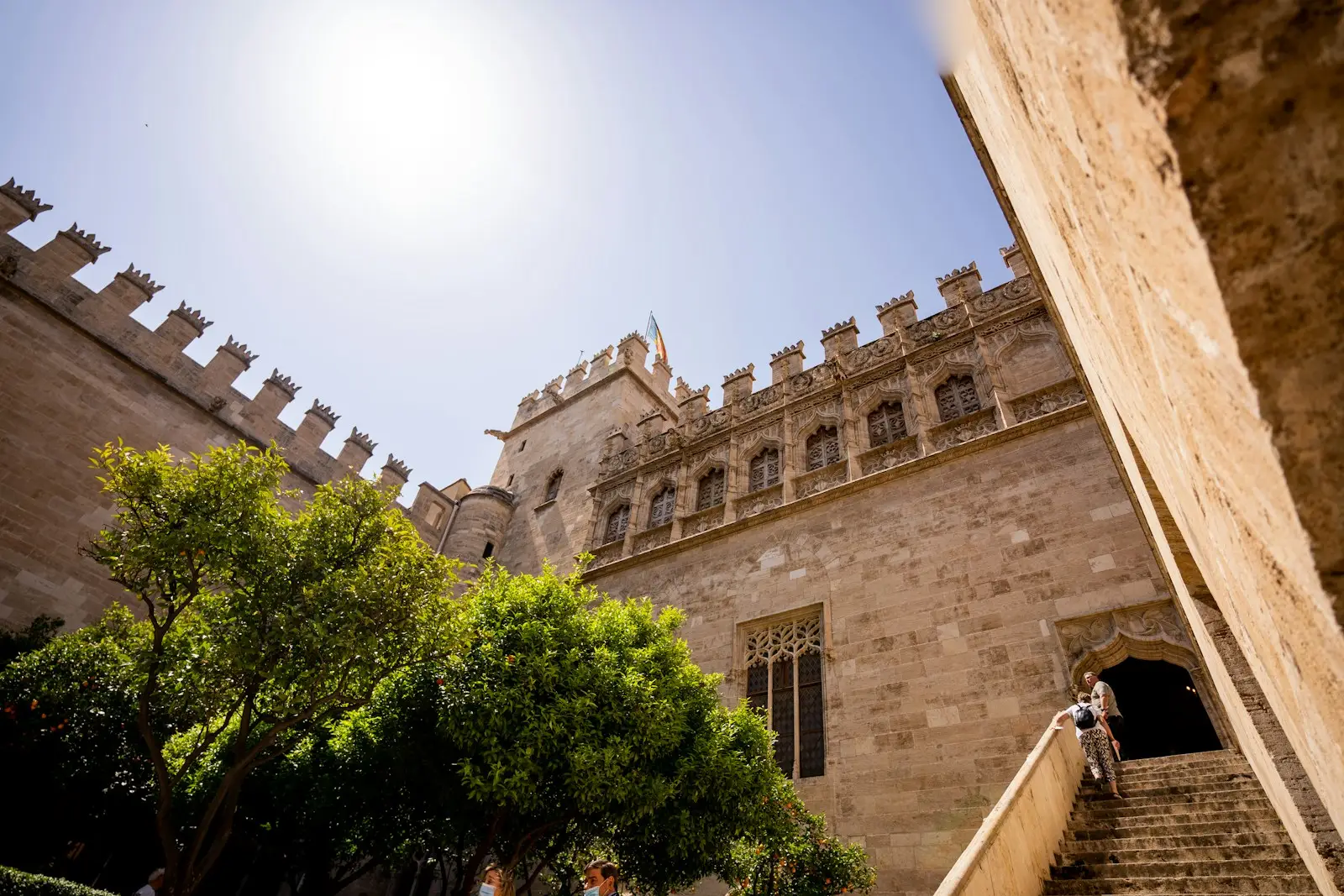
La Lonja de la Seda. A UNESCO World Heritage Site and probably the most beautiful building in Valencia. A 15th-century Gothic merchants' exchange with columns twisted like stone palm trees. Go inside: the interior is even more impressive than the facade.
El Mercado Central. A Modernist market hall from 1928 and one of the largest food markets in Europe. This is not a tourist trap in disguise — Valencians actually shop here. Go in the morning, grab a bite and take in the fish and fruit stalls.
El barrio del Carmen. The medieval heart of the city: a maze of narrow lanes, hidden squares, street art and bars. Wander by day; at night it is one of the main going-out areas. Get pleasantly lost — it is small enough that you never truly will be.
The Towers. Two monumental gateways survive from the medieval walls: the Torres de Serranos and the Torres de Quart. Both can be climbed, and from Serranos you get a fine view over the start of the Jardines del Turia.
The inner garden of La Lonja de la Seda, a jewel of Valencian civic Gothic architecture and a UNESCO World Heritage Site — Northleg Official / Unsplash
"Valencia has a peculiarity that defines it: its river is no longer a river. It is a nine-kilometer park that runs through the entire city."
Valencia · Fee4Me
3. The Ciudad de las Artes: Valencia's vision of the future
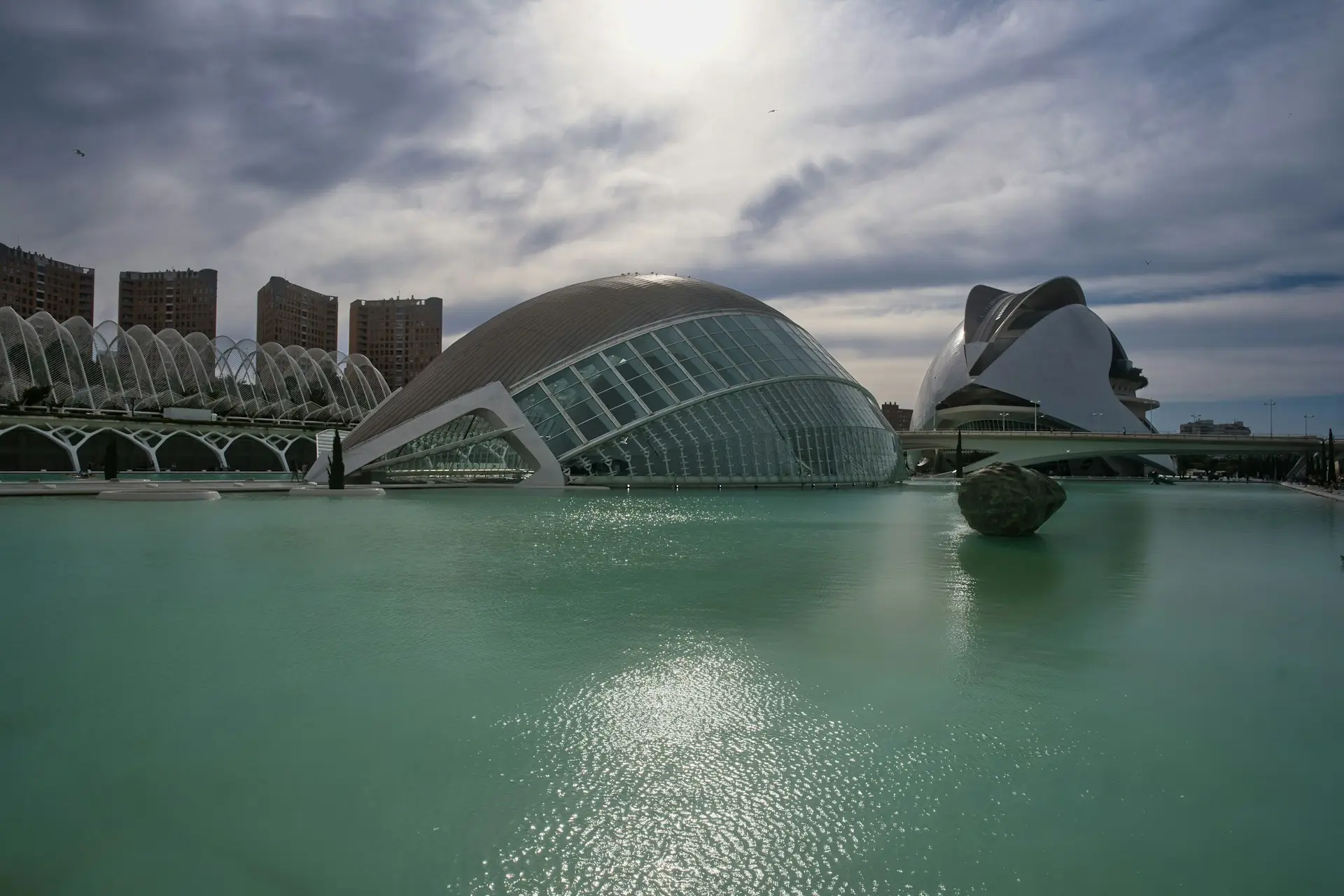
At the southern end of the old Turia riverbed stands Valencia's most iconic landmark: the Ciudad de las Artes y las Ciencias, Calatrava's complex that looks as though it has landed from another planet.
El Oceanogràfic. The largest aquarium in Europe, home to sharks, beluga whales, penguins and an underwater tunnel. It is the priciest ticket in the complex — especially worth it with children. Book online.
El Hemisfèric. The eye-shaped building: inside, an IMAX cinema and planetarium.
El Museu de les Ciències. An interactive science museum shaped like a whale skeleton. Great for families.
The outside is free — and arguably the best part. Even if you don't go in anywhere, strolling among the buildings — the reflecting pools, the gleaming white forms, the Ágora and the Umbracle — is a spectacle in itself. Come at sunset: the light on the water and the white concrete is the most photographed scene in the city.
Tip: if you plan to visit several venues, there is a combination ticket. If you are only going to one with children, make it the Oceanogràfic.
4. The beach and the sea: Valencia is also a coastal city
Unlike most capital cities, in Valencia the beach is right inside the city, just twenty minutes from the center by public transport.
La Malvarrosa and Las Arenas are wide, sandy urban beaches with a promenade, beach bars and restaurants. This is no hidden cove — it is a city beach, with everything that implies in high summer, both good and crowded — but the fact that a capital city offers this a metro ride away is something of a luxury.
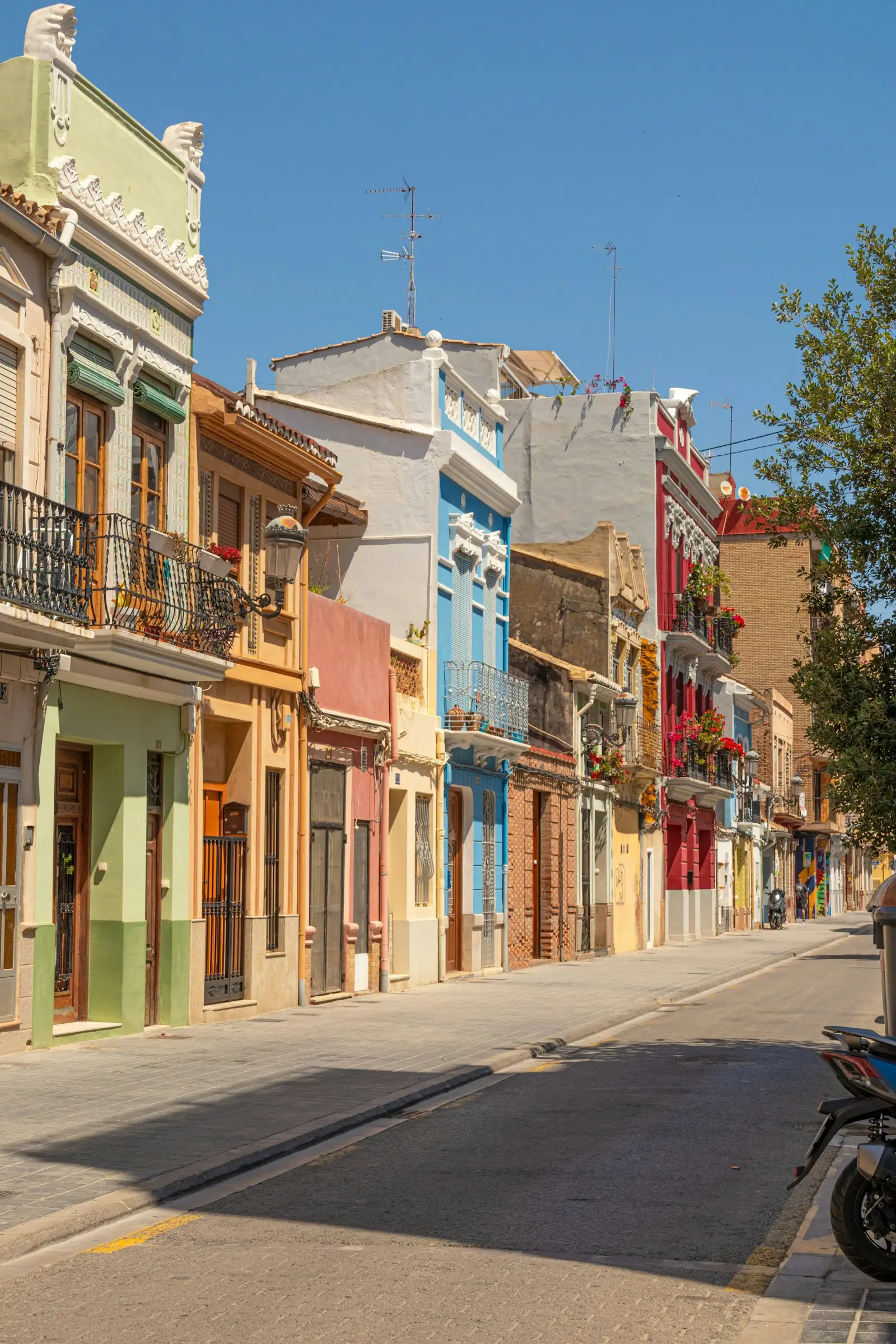
El Cabanyal is the neighborhood you should not miss here. A former fishing village absorbed into the city, with low-rise houses sporting colorful tiled facades, a grid-plan street layout and a character entirely its own. It inspired Sorolla, who painted his summers on this very beach. One of Valencia's most distinctive neighborhoods, long neglected and now experiencing a genuine renaissance of bars and studios, it rewards an unhurried wander.
Eating by the sea: the promenade is lined with rice restaurants. This is where many Valencians come for their Sunday paella with a sea view.
A street in El Cabanyal, the former fishing neighborhood that Sorolla immortalized and that is living a vibrant new chapter today — Danielle Suijkerbuijk / Unsplash
5. La Albufera: where paella was born
Ten kilometers to the south, and technically within the municipality of Valencia, lies the Parque Natural de la Albufera: a vast freshwater lagoon separated from the sea by a sandbar and surrounded by rice paddies. This is, quite literally, where paella was born.
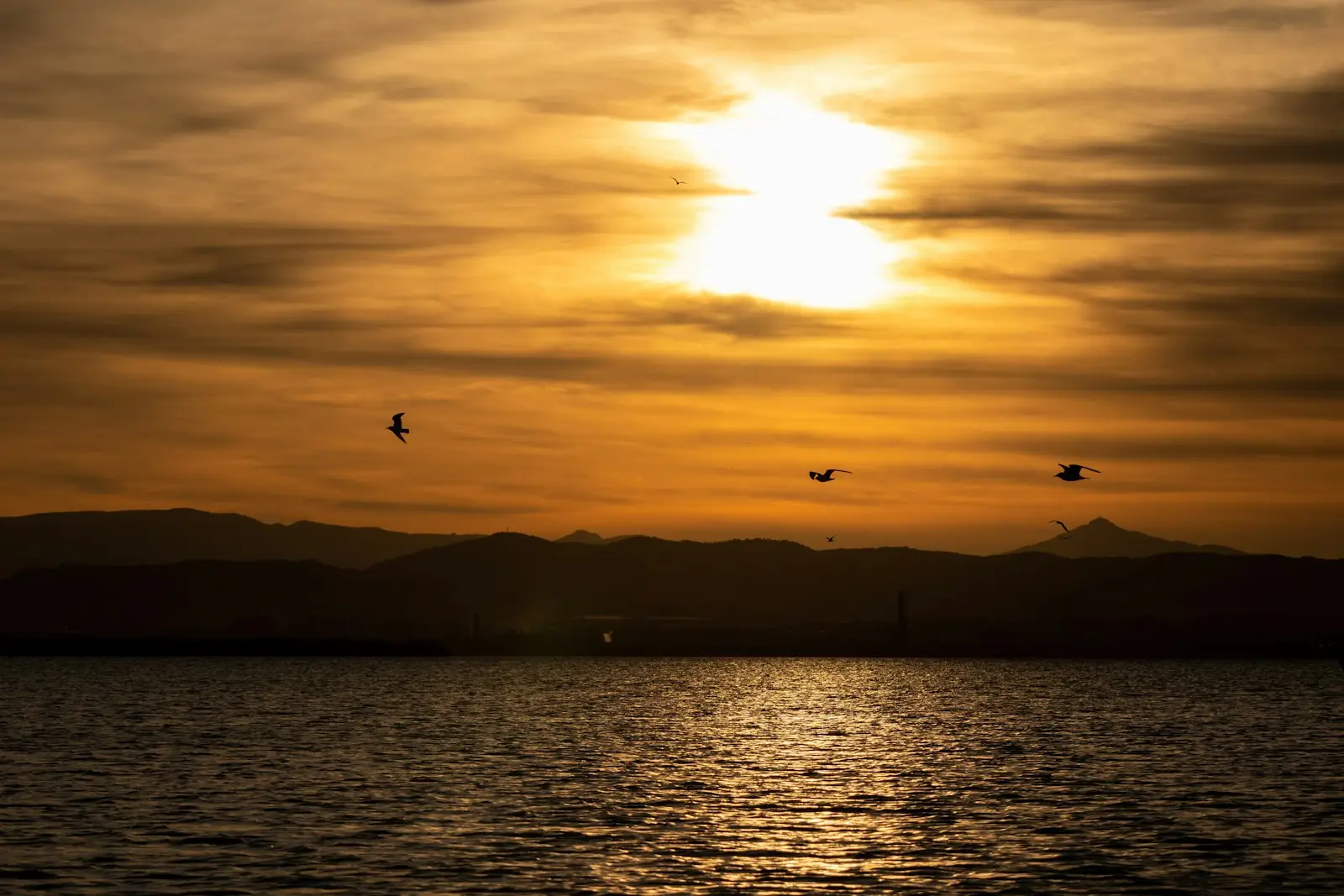
A boat ride at sunset. A traditional wooden boat takes you out across the lagoon as the sun sets over the water and the rice fields. It is one of the most beautiful sights in the area. Boats depart from El Palmar and from the Gola del Pujol.
Lunch in El Palmar. The village inside the Albufera is packed with rice restaurants. This is where you eat authentic Valencian paella — the real thing: chicken, rabbit, garrofó beans and green beans; not the seafood version, which is an entirely different dish — along with all i pebre, the local eel stew.
Getting there: by car it takes 20 minutes; by bus from the center, a little longer. Many visitors combine it with a trip to the beach.
A note on paella: if you order "paella" in Valencia you will be served the Valencian version — meat and vegetables, not seafood. The seafood rice exists but goes by a different name. And the rice many locals love most is neither: it might be arròs a banda or a creamy meloso. Ask your server and let yourself be guided.
Sunset over the Albufera de Valencia: gulls above the lagoon where paella was born — Samuel Pujades / Unsplash
6. Neighborhood by neighborhood: where to base yourself
Ciutat Vella (the old town). El Carmen, the market, the cathedral. Central, monumental and perfect for a first visit. Everything within walking distance.
Ruzafa (Russafa). The fashionable neighborhood: bohemian, with terraces, international kitchens, design shops and plenty of life. Think of it as Valencia's Malasaña. Ideal if you want neighborhood buzz and a great dining scene.
El Cabanyal. Right by the beach, full of character and on the rise. Perfect if you want the sea and something authentic, though it sits a little further from the center.
El Ensanche (L'Eixample). Modernist and elegant, centered on the Mercado de Colón — a gem of iron and ceramics. Residential, comfortable and well-connected.
The Valencia trick: almost everything worth seeing lies between the old town, the Turia and the sea, all linked by bike in minutes. Valencia is flat — the bicycle is simply the best way to get around.
7. When to go
Valencia rewards a visit almost any time of year thanks to its mild climate, though each season has its own character.
Spring (March–June) is probably the best: perfect weather, long days and the beach just beginning to warm up. And if you come in March, you will experience Las Fallas (15th–19th): Valencia's wildest festival, when enormous papier-mâché sculptures fill the streets and are burned on the final night, with fireworks around the clock and the whole city out on the streets. It is spectacular and it is chaotic: if you are coming for Las Fallas, forget about quiet museum visits; if not, steer clear of those dates.
Summer (July–August) means beach, heat and nightlife, but also peak tourism and oppressive humidity. The nights are the best part.
Autumn (September–November) brings pleasant temperatures, a still-warm sea and thinner crowds. An excellent time to visit.
Winter (December–February) is mild — temperatures rarely dip below 10 °C — and ideal for exploring the city without queues or heat.
8. Getting around
From the airport to the center. Manises Airport is about 8 km away and the metro (lines 3 and 5) connects it to the center in roughly 20 minutes. Convenient and inexpensive.
Around the city. Valencia is flat and compact, built for cycling: it has an extensive network of bike lanes (much of it through the Turia) and a public bike-sharing scheme (Valenbisi). The metro and tram cover what the bike cannot reach — the tram is the easiest way to the beaches. For the historic center, you simply walk.
In short: bike for almost everything, tram for the beach, metro for the airport. A car only makes sense if you are heading to the Albufera or planning day trips outside the city.
9. Day trips
Valencia makes an excellent base for exploring the region:
Xàtiva (one hour by train): a hilltop town crowned by one of the most spectacular castles in the interior.
Sagunto (half an hour): a Roman theatre and a castle overlooking the sea.
Peñíscola (further north): a walled old town perched on a rock jutting into the sea — pure postcard material.
La Albufera, already covered above, is the closest and most quintessentially Valencian.
Where to stay in Valencia
Your neighborhood shapes the whole experience. Ciutat Vella puts everything on your doorstep; Ruzafa gives you neighborhood life and a great food scene; El Cabanyal brings you close to the sea. For cycling the Turia, any of the three works perfectly. At Fee4Me we manage vacation rentals on the Mediterranean coast — Alicante and the Costa Blanca, just a short distance from Valencia — designed so that your stay works seamlessly from the moment you arrive: a fully equipped kitchen, real living space and direct communication throughout your trip. Check availability at houses.fee4me.com.
Two full days cover the essentials: one for the old town (the cathedral, La Lonja, Mercado Central and El Carmen) and one for the Ciudad de las Artes, the beach and El Cabanyal. A third day lets you add the Albufera at a relaxed pace or a day trip such as Xàtiva.
Absolutely, and with complete normality. The city of Valencia suffered no structural damage — the Turia riverbed was rerouted around the outskirts after the 1957 flood — and everything is fully operational: transport, museums, beaches and cultural events. The areas affected by the DANA lie outside the urban core.
In El Palmar, the village inside the Albufera, where the dish was born. This is where you find authentic Valencian paella: chicken, rabbit and vegetables — not seafood, which is a different dish entirely. The beachfront promenade also has excellent rice restaurants with sea views.
By bicycle. Valencia is flat and has an extensive network of bike lanes, much of it running through the Jardines del Turia, connecting the center to the sea without touching any traffic. The tram is the easiest way to the beaches, and the metro reaches the airport in 20 minutes.
Spring and autumn offer the best weather and fewer crowds. March brings Las Fallas (15th–19th) — spectacular but chaotic: if you are not coming specifically for the festival, avoid those dates. Summer is all beach and heat with peak tourism; winter is mild and ideal for seeing the city without queues.
Experiences
Book your activities in Valencia
Curated experiences by GetYourGuide, our official partner.