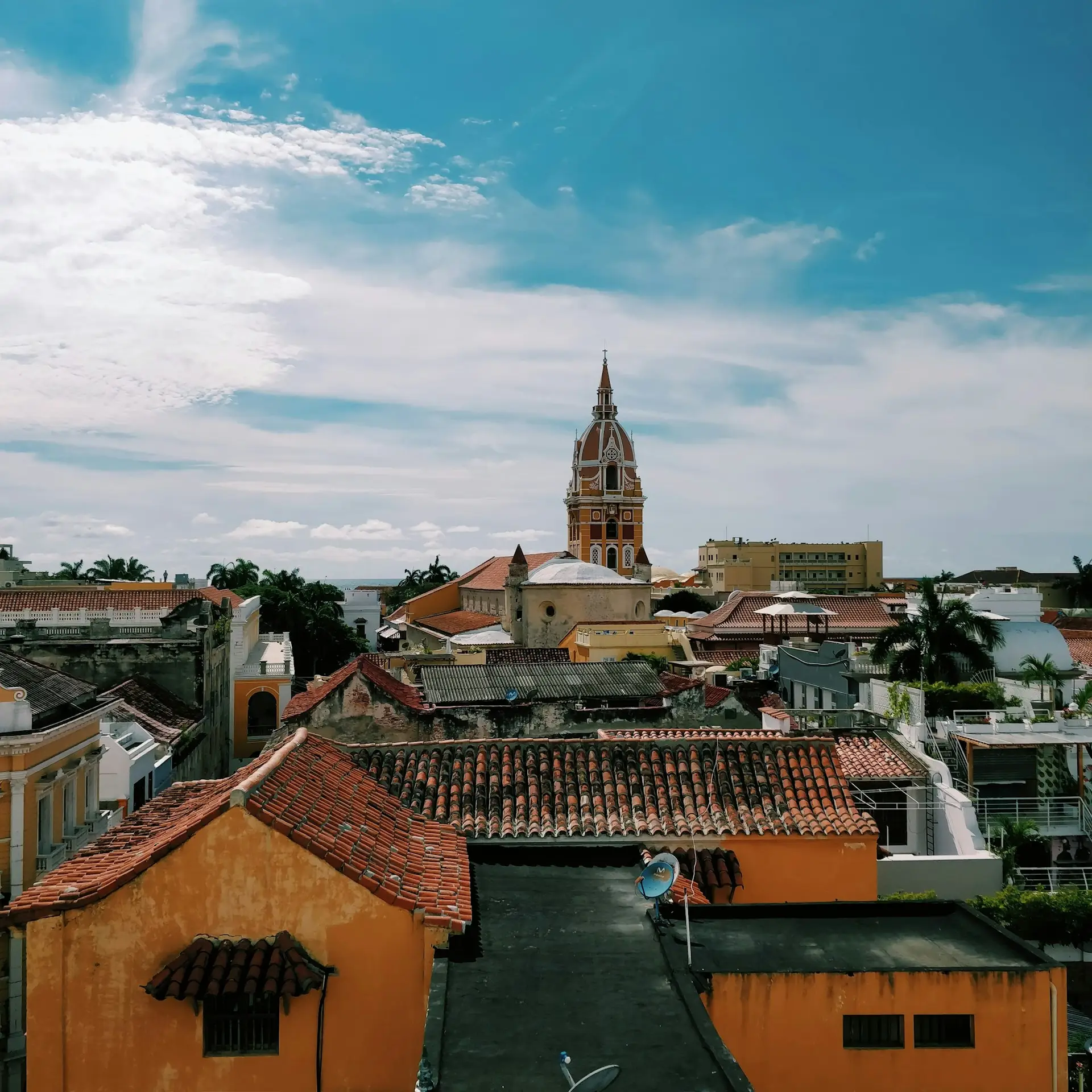
Cartagena de Indias: how to explore the historic centre without missing the good bits
The Walled City, Getsemaní and the Caribbean. The honest guide: when to head out, which area to choose and what is best skipped.
Cartagena's historic centre fits into a twenty-minute walk from end to end, and that is both its charm and its trap. It is so small, so photogenic and so easy to get around that you can cross it in an afternoon and leave without having understood a thing. This guide is not an inventory of what is there —you can find that anywhere— but what we learnt about how the city really works: what time to be out on the street, which neighbourhood to choose depending on what you are after, and which experiences everyone recommends are worth neither the time nor the money they cost.
The centre is not one place but three
The first thing worth understanding, because it changes everything, is that in Cartagena the word "centre" refers to three different places, and the difference between them matters far more than the map suggests. They sit side by side —you can walk from one to another in under fifteen minutes— but each has its own character, its own rhythm and its own crowd.
The Walled City (Centro amurallado) is postcard Cartagena: the Cathedral, the Plaza de Bolívar, the colonial mansions with wooden balconies and trailing flowers. It is also where the luxury hotels and white-tablecloth restaurants are concentrated and, in equal measure, the vendors who will approach you every few metres. It is beautiful and you have to see it, but it is the most touristy and most expensive version of the city.
Getsemaní lies just the other side of the Torre del Reloj, and its recent history is the most interesting of the three. Fifteen years ago guidebooks advised against it; today it is where the city's heart beats. Its streets are an open-air street-art museum, its squares fill with people at sunset and its fondas serve the best neighbourhood cooking in Cartagena. It is gentrifying at full speed, that is undeniable, but it still keeps an authentic pulse that the walled city lost long ago.
San Diego occupies the north-eastern corner of the walled enclosure and is the best-kept secret of the three: more residential, quieter, with small squares where neighbours bring their chairs out onto the street and noticeably fewer tourists passing through. If we went back to Cartagena, this is where we would look for somewhere to sleep.
"The historic centre fits into a twenty-minute walk. That is its charm and its trap: you can cover it in an afternoon and leave without having understood a thing."
Timing matters more than place
Cartagena sits ten degrees north of the equator, and that figure, which looks like an unimportant geography fact, in practice governs the whole trip. It means the sun falls almost vertically all year round and there is no season to soften it. Between eleven in the morning and three in the afternoon, the walled centre turns into an oven: the limestone of the walls absorbs the heat and gives it back, and the air, heavy with humidity, does not move. The people smiling in midday photos are, in reality, suffering.
We ended up organising each day into two halves separated by a long break. The first, from half past six to ten in the morning, when the city belongs to early risers, the walls are deserted and you can walk without your clothes sticking to you. The second, from half past four in the afternoon onwards, when the sun eases off and Cartagena becomes friendly again, glows golden and steps out into the street. And in between, those four dead hours around midday that are not worth wasting fighting the heat: better a long lunch, a siesta or the Museo del Oro Zenú, which, as well as being free, has the air conditioning your body will be grateful for.
As for the time of year, the rule is simple. December to April is the dry season, the most comfortable for walking and also the most expensive and crowded. September and October are the rainy months: brief downpours that cool the afternoon, lower prices and far fewer people on the streets.
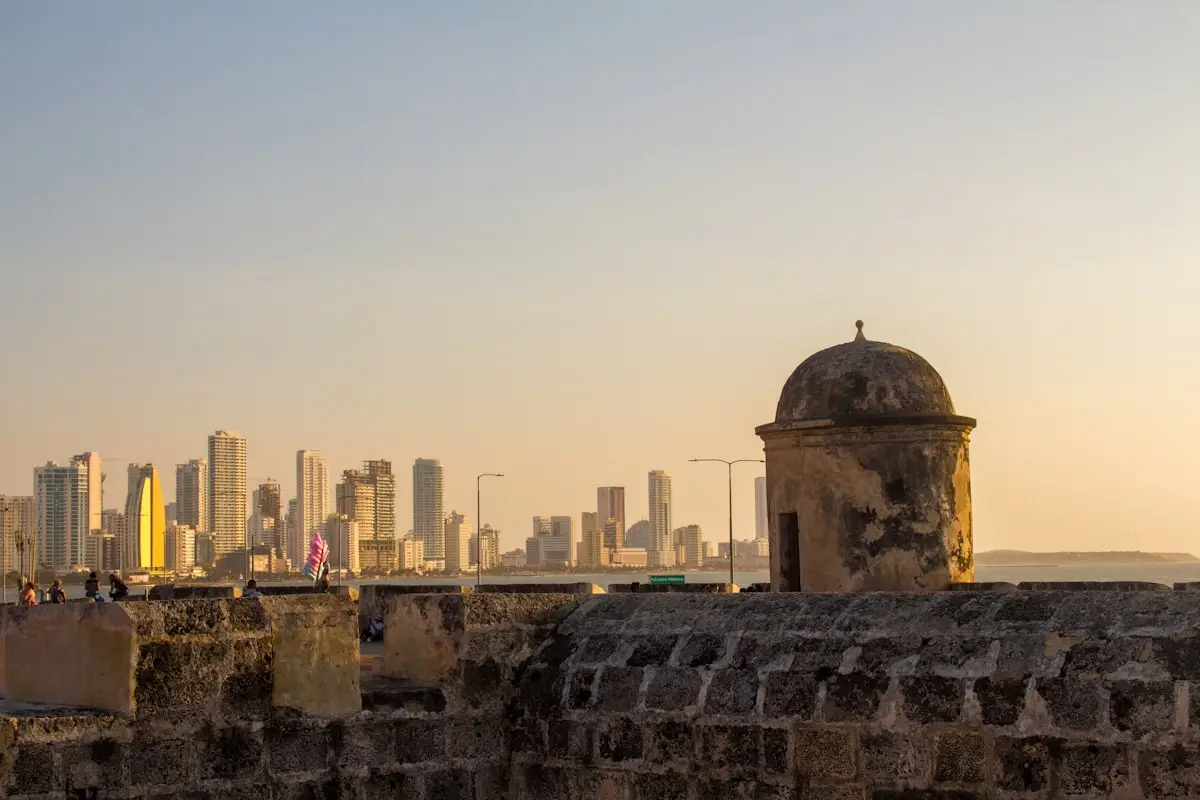
ON THE MAP
- Walled City (Historic Centre)
- Getsemaní
- Castillo de San Felipe de Barajas
- The City Walls
- San Diego Quarter
- Clock Tower
What is worth it
This is where most guides simply repeat the usual list without telling you which of it all is really worth your time. This is what, having walked the city, we think genuinely pays off.
The walls at dawn. Eleven kilometres of fortifications built in the seventeenth century to defend the city from pirates, and at seven in the morning you have them to yourself. You can walk a good part of the northern stretch without meeting a soul, with the Caribbean breaking on one side and the city waking up on the other. It is, without question, the best moment of the day.
Getsemaní with no plan. There is nothing in particular to look for: just drop by the Plaza de la Trinidad from seven in the evening and stay. People sitting on the church steps, the smoke from the arepas de huevo, football matches that spring up and break apart, music drifting out of doorways. This is the Cartagena that is lived, not the one that is photographed.
The Castillo de San Felipe. The largest fortress the Spanish built in the Americas, and it shows. It is impressive from below and even more so inside, especially the maze of tunnels carved into the rock. Go first thing, because on the way up there is not a single patch of shade to shelter in.
Getting lost in San Diego. No map, on purpose. The neighbourhood is so small that it is impossible to get completely lost, and its quiet streets are the best antidote to the bustle of the rest of the centre.
And what is not
And this is where almost every article about Cartagena leaves you in the lurch, because it is easier to recommend than to advise against. Let us get straight to what, in our experience, does not live up to its promise.
The Islas del Rosario as a day trip sound like paradise and play out as an exhausting day: two hours on a boat bouncing over choppy seas on the way out, three hours on a crowded private beach and another two hours back, worn out. If you really want islands, spend a night there; as a day trip it is not worth it.
Bocagrande beach is a stone's throw from the centre and the easiest to reach, but the water is murky from the sediment carried down by the Canal del Dique. Nobody travels to Cartagena for this beach, and those who do come back disappointed.
The restaurants on the Plaza de Santo Domingo have the best location imaginable, Miami prices and food that is merely passable. What you are paying for is the square and the photo; in Getsemaní you will eat better for half the money.
A note in case you have seen old photos: the horse-drawn carriages no longer run. Until the end of 2025 they were part of the walled city's scenery, but the city withdrew them after years of debate about animal welfare. You will not find them any more.
Playa Blanca, on Barú, as a day trip has the best sand in the area, but the journey eats up the day and you arrive at the worst time, with the sun at its highest and the beach packed. It only makes sense if you sleep there.
And the chiva rumbera tours, those brightly painted party buses with the music at full blast and aguardiente included, delight some people and are too much for many after fifteen minutes. You will know which group you belong to.
Eating well (and where the trick lies)
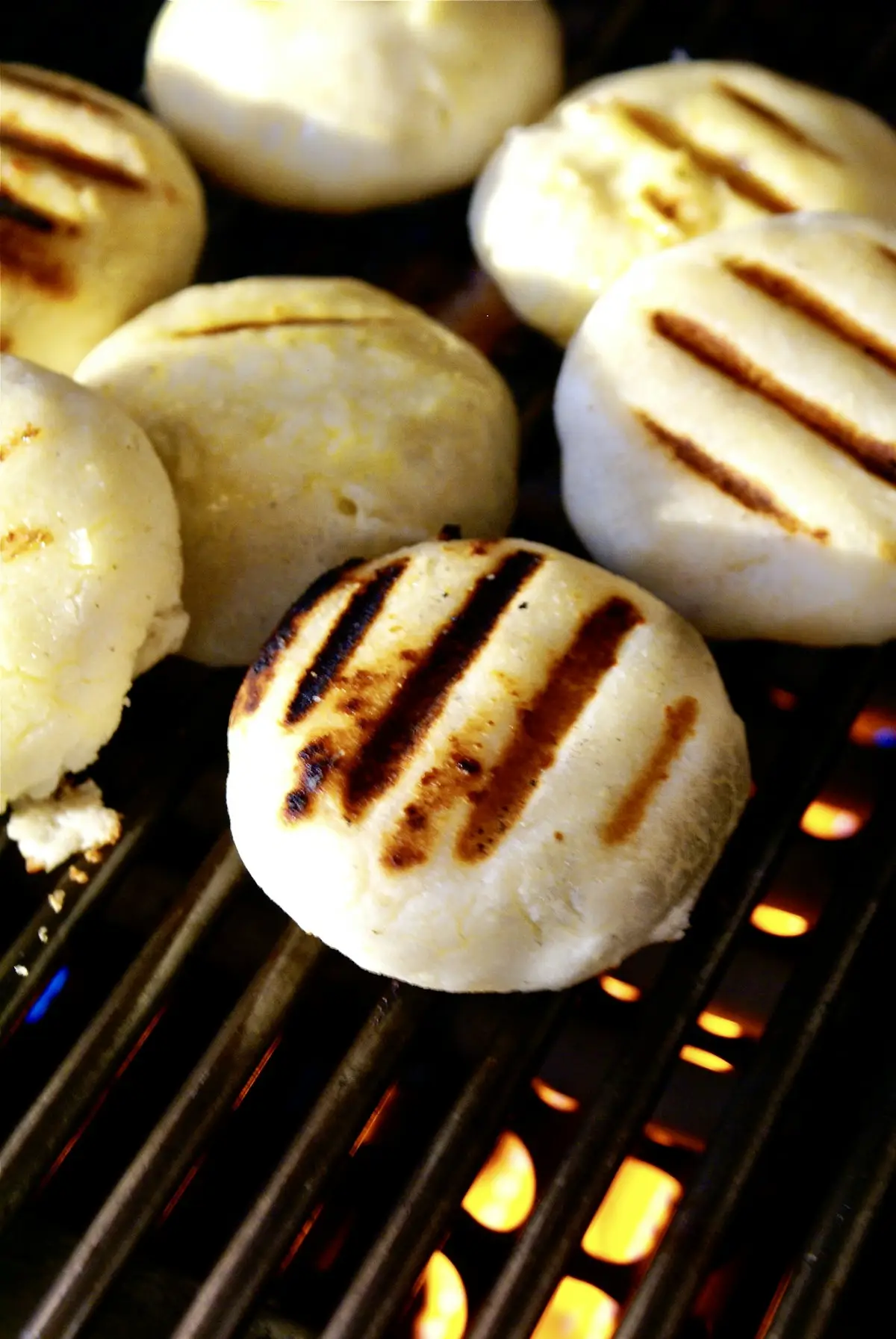
Cartagena's cooking is Caribbean at heart: fish, coconut, plantain and fried food, with the heritage of three continents simmering slowly for centuries. There are dishes you should not miss. The arepa de huevo, fried with a whole egg cooked inside, eaten standing up and above all for breakfast. The posta cartagenera, beef slow-braised in a dark, sweet sauce that tastes of Sunday lunch. Arroz con coco, golden and slightly sweet, which comes with almost everything. And ceviche, sweeter and less sharp here than the Peruvian kind.
The trick to eating well without breaking the bank is the same one that works across much of Spain: look for the menú del día. In neighbourhood fondas, in Getsemaní or on any street away from the walled city, a full set menu costs a fraction of what any tourist-oriented menu asks, and it often tastes considerably better.
Two practical warnings before you sit down: the tap water is not safe to drink, so always buy bottled; and although the cut fruit sold on the street is delicious and a real temptation in this heat, it is best to choose the busiest stalls, where the fruit has not been sitting in the sun for hours.
The other Cartagena: champeta, palenqueras and an Afro-Caribbean soul
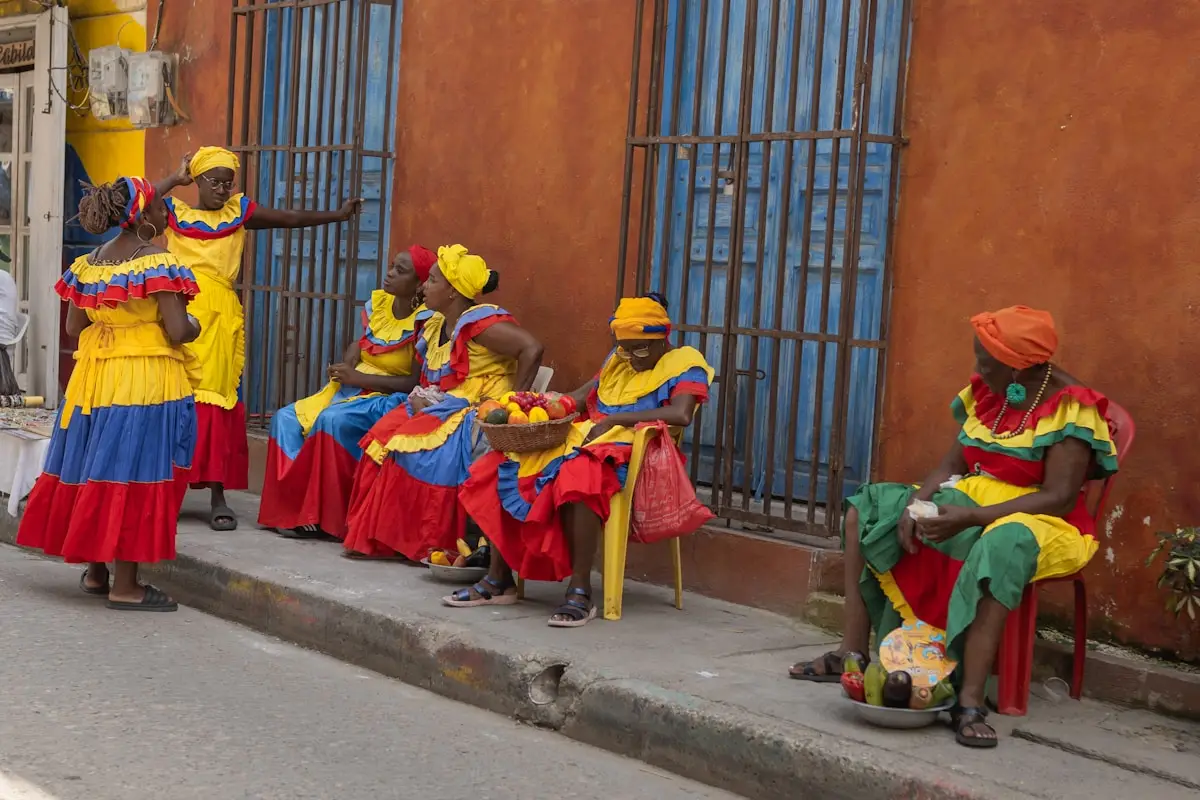
There is a whole Cartagena that does not fit inside the walls and yet is the one that gives the city its true soul. It is Afro-Caribbean Cartagena: that of San Basilio de Palenque, the first town of free Africans in all the Americas; that of the palenqueras, the women in blazing dresses who carry four centuries of history on their heads along with their basins of fruit; that of champeta, the music born scorned in the poorer neighbourhoods and today the city's pride; that of the Bazurto market, the chaotic, noisy labyrinth where Cartagena really eats while the music plays at full volume.
It is too much, and too good, to cover in a paragraph of a guide. That is why we have devoted an entire feature to it: The other Cartagena: champeta, palenqueras and the Afro-Caribbean soul beyond the walls. If you want to understand where this city's music, food and overflowing joy come from —and not settle for the colonial postcard alone— that is the place to start.
Us in Colombia
At Fee4Me we manage holiday accommodation in Colombia and we are expanding our portfolio across the country. As of today we have no homes in Cartagena —we do in Bucaramanga, and we keep adding properties month by month— which is why this guide does not include recommendations for our own stays: we would rather not sell you something we do not yet manage. If you own a property in Cartagena or anywhere else in Colombia and are thinking of letting it as a holiday rental with professional management, that is a conversation we would be delighted to have.
Getting around, haggling and other things nobody tells you
Day 1
Start with the city walls at dawn, when they are completely empty and the sun has not yet started to punish. It is the best moment of the day in Cartagena and hardly anyone takes advantage of it. Afterwards, the Centro amurallado at an unhurried pace: the Cathedral, the Plaza de Bolívar in the shade of its trees, the façades with wooden balconies heavy with bougainvillea. When the sun starts to beat down, take refuge in the Museo del Oro Zenú, which is free, air-conditioned and fills exactly the hours when the street is inhospitable.
Save Getsemaní for when evening falls. From seven o'clock, the Plaza de la Trinidad comes alive: people sitting on the church steps, vendors selling arepas de huevo, music spilling out of the bars and children playing football between the groups. There is nothing in particular to do, just let yourself be carried along by the atmosphere until you get hungry.
Day 2
The Castillo de San Felipe de Barajas first thing, no exceptions: the climb has not a single patch of shade and by mid-morning it becomes an ordeal. It truly deserves the visit, above all for the tunnels carved into the rock, where the sound of your own footsteps multiplies in the darkness.
In the afternoon, lose yourself in San Diego with no map and no plan. It is the quietest corner of the walled city, with residential streets and little squares that tourists barely reach. End the day at Las Bóvedas and treat yourself to one last walk along the walls as the sun sinks into the Caribbean.
With more days
If you have an extra night, the Islas del Rosario or the island of Barú make perfect sense: instead of the exhausting there-and-back day trip, you arrive in the afternoon, sleep there and enjoy the turquoise water first thing, when the sea is calm and the tour boats have not yet arrived.
And set aside time for the Cartagena that does not fit inside the walls: its Afro-Caribbean culture, the music, the markets and the history of San Basilio de Palenque. There is so much of it, and it is so good, that we have devoted an entire article to it, linked further down.
With more time
If you have days to spare, there are trips that are well worth it. Mompox, a colonial town frozen in time on the banks of the Magdalena River, a UNESCO World Heritage Site with a fraction of Cartagena's tourism. The Volcán de Lodo El Totumo, an hour away, more a fun curiosity than a marvel, but an experience you will not forget. Playa Blanca, on Barú, the best beach in the area, provided you sleep there rather than endure it on a day trip. And Barranquilla, two hours away, especially if your trip coincides with its carnival, the most famous in Colombia.
Practical tips
Split the day into two halves: from 6:30 to 10:00 a.m. and from 4:30 p.m. until nightfall. Between eleven and three in the afternoon the walled city is a stone oven, so use those hours for a leisurely lunch, a siesta or an air-conditioned museum.
You will be approached non-stop —sunglasses, hats, massages, tours, cigars. It is not dangerous, but it is tiring: a firm "no, gracias" while you keep walking works far better than stopping to explain yourself.
Prices come in two tiers: the one they quote you and the one a local pays. At stalls with no written menu, asking the price before you order is normal and nobody takes offence.
The humidity is more draining than the heat: sweat does not evaporate and your body cannot cool down. Drink more water than you think you need, and always bottled, because the tap water is not safe to drink.
Cash is king: many taxis and street stalls do not accept cards. Carry pesos in small notes and only change money at cash machines belonging to major banks, never with people offering to do it in the street.
Experiences
Book activities in Cartagena de Indias
GetYourGuide, our official partner.
Things to do in Cartagena de Indias
Tours, guided visits and experiences, powered by GetYourGuide.
This will load content from GetYourGuide.
STAYS IN COLOMBIA
Explore our properties in Colombia
We do not manage homes in Cartagena yet, but we do elsewhere in Colombia. Browse the full catalogue and book direct, with no commission fees and with Fee4Me's support throughout your stay.
Explore stays in Colombia BucaramangaRead guide
 BogotáComing soon
 CaliComing soon
 BaricharaComing soon
 SalentoComing soon
 FilandiaComing soon