Spain · Urban life
48 Hours in Barcelona: from the Gothic Quarter to Barceloneta
The Catalan capital in one perfect weekend: culture, beach, and gastronomy.
Read →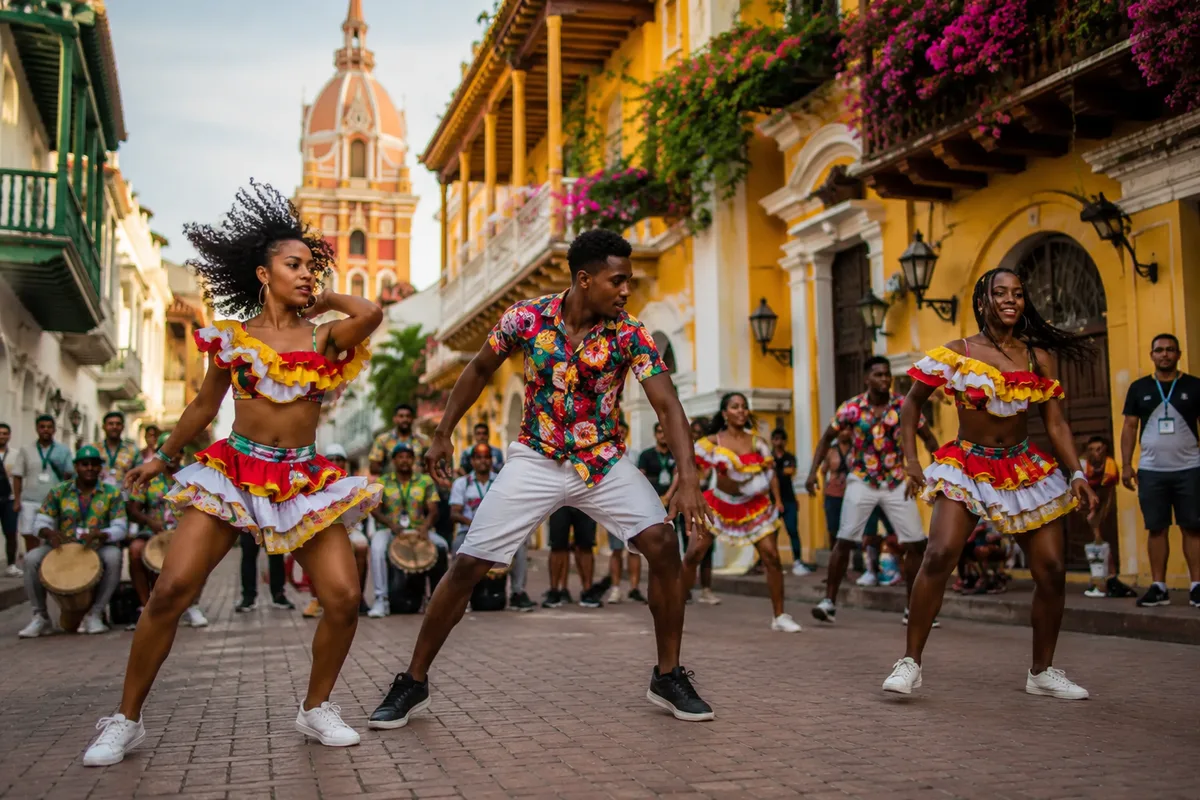
Almost everyone visits the same Cartagena: the walled city, its bougainvillea-draped balconies, the sunset over the ramparts. It is beautiful and worthy of every photograph. But just a few streets away, another city pulses — louder, blacker, more alive — one that almost no guidebook captures well. It is Afro-Caribbean Cartagena, and it is what gives the city its soul.
↓There is a photograph that almost every visitor to Cartagena takes home: a dark-skinned woman in a vivid, colorful dress, with a tray of tropical fruits balanced in perfect equilibrium on her head, smiling along the cobblestone streets of the historic center. The image is beautiful and appears on thousands of travel profiles. But behind it lies a story the postcard never tells: that woman is a palenquera, and what she carries on her head is far more than fruit. She carries four centuries of resistance, freedom, and memory.
Cartagena de Indias is two cities at once. There is the city of the walls — colonial, touristic, dazzling — which was for centuries the main port of entry for enslaved people throughout the Spanish Caribbean. And then there is the other one: the city built by the very descendants of those people, with their music, their food, and their way of inhabiting the tropics. This second Cartagena does not fit within the walls. It begins precisely where the photograph ends.
This is not a tour of monuments. It is a journey through the Afro-Caribbean identity that beats at the heart of the city: the people who declared themselves free before anyone else in the Americas, the music that was born in contempt and is today a source of pride, and the loud, sprawling market where Cartagena truly eats.
A little over an hour from Cartagena, in the foothills of the Montes de María, there is a village of some 4,000 inhabitants that appears in few guidebooks and yet is one of the most important places in the history of the continent. It is called San Basilio de Palenque, and it was the first place in the Americas where Africans lived free.
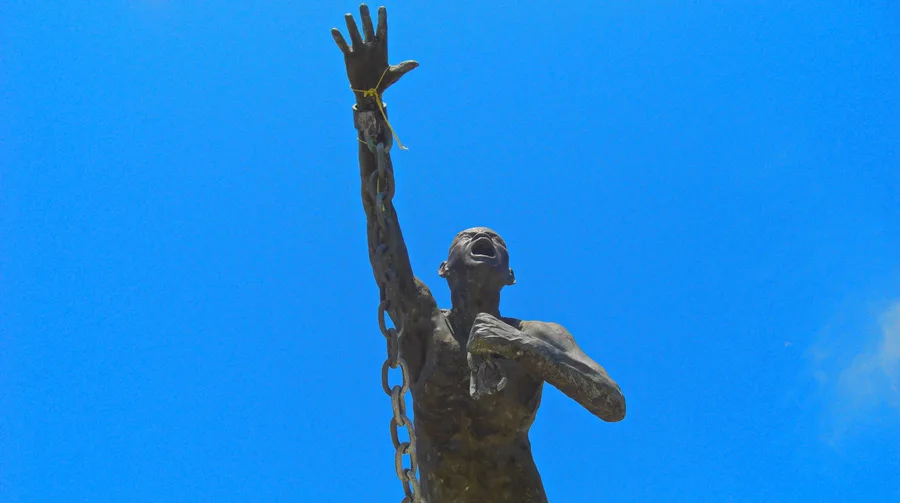
Its story begins in the late sixteenth century with Benkos Biohó, a man who had been a king in Africa — most likely in the region of present-day Congo or Angola — captured and sold into slavery, who arrived at the port of Cartagena and managed to escape around 1599. Rather than flee alone, Biohó organized other runaways and founded a fortified settlement, a *palenque*, in the hills. From there, they resisted for decades the Spanish Crown's attempts to subdue them.
The resistance was so fierce that in 1691 the Spanish Crown ended up signing a decree recognizing the freedom of Palenque's inhabitants, with one condition: that they stop sheltering new runaways. It was, in effect, one of the first territories in the Americas to obtain a freedom recognized in writing. Due to its isolation, the village was able to preserve across generations something extraordinary: its own language, its food, its music, and its rites.
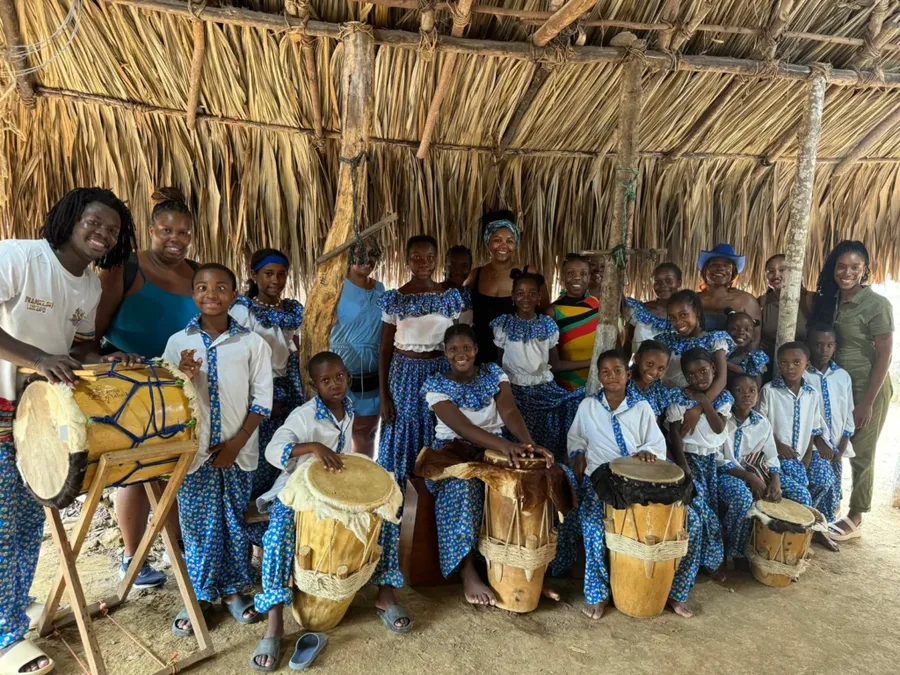
That language, Palenquero, is unique in the world: the only creole language in the Americas with a Spanish lexical base and a strong structure rooted in Bantu African languages. In 2005, UNESCO declared the cultural space of San Basilio de Palenque a Masterpiece of the Oral and Intangible Heritage of Humanity, recognizing that a way of life survives there — language, music, traditional medicine, social organization — that traces back to the first free Africans on the continent.
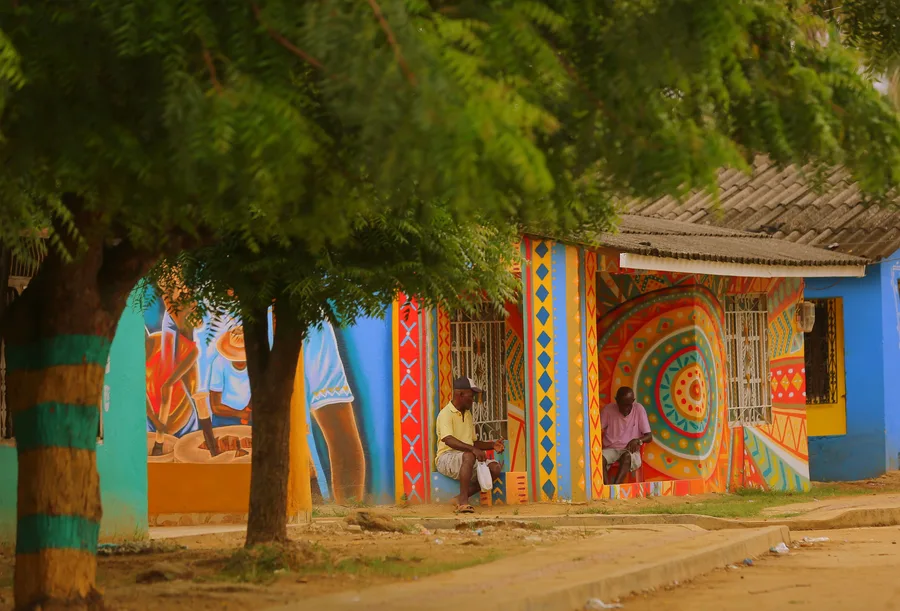
Today, Palenque can be visited on a day trip from Cartagena. The best way to do so is with guides from the community itself, who welcome visitors into their homes, recount the story of their ancestors in front of the statue of Benkos Biohó in the main square, and explain why this dusty village is, in truth, a universal symbol of freedom. Visiting responsibly — with local operators, at the village's own pace — is the difference between a spectacle and a genuine encounter.
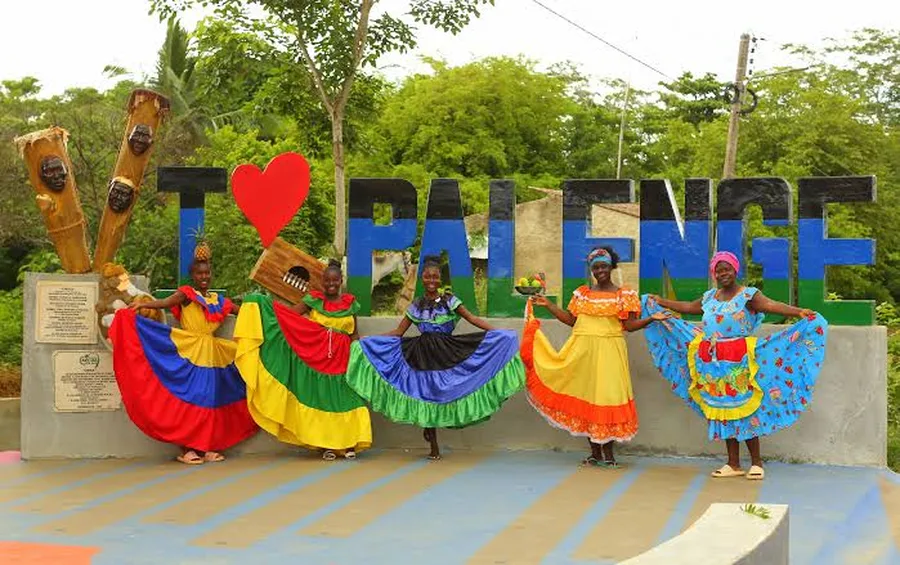
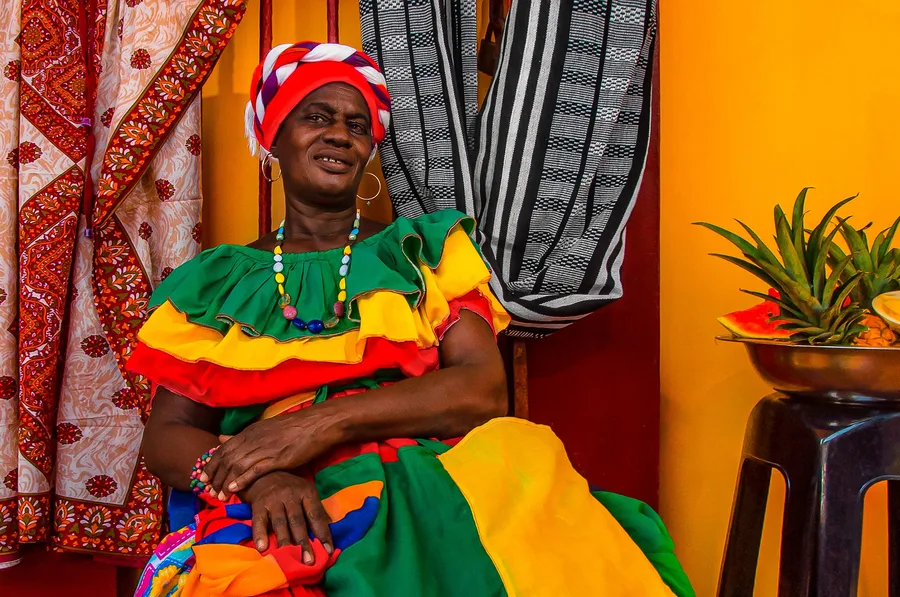
Let us return to the woman in the photograph. The palenqueras are, for the most part, women descended from San Basilio de Palenque who for generations have come down to Cartagena to sell fruit and sweets through the streets of the historic center. Their colorful dresses, their turbans, and the large metal *poncheras* they balance on their heads are not a costume for tourists: they are the continuation of a tradition more than three centuries old.
In the past, when Palenque was isolated and earning a living was hard, the women prepared sweets from what the land provided and walked for hours to Cartagena to sell them. That economy of survival became identity. Today the palenqueras are regarded as cultural ambassadors of the city, and many keep alive recipes passed from mother to daughter for 400 years.
Behind every tray lies an Afro-Caribbean recipe book well worth discovering:
Buying from the palenqueras is, beyond the treat itself, a way of sustaining a living tradition. It is best to agree on a price beforehand, and if you want to take a photograph, ask respectfully: many are happy to oblige, and some ask for a small tip in return. That is fair — they have spent centuries being the face of a city that has not always treated them well.
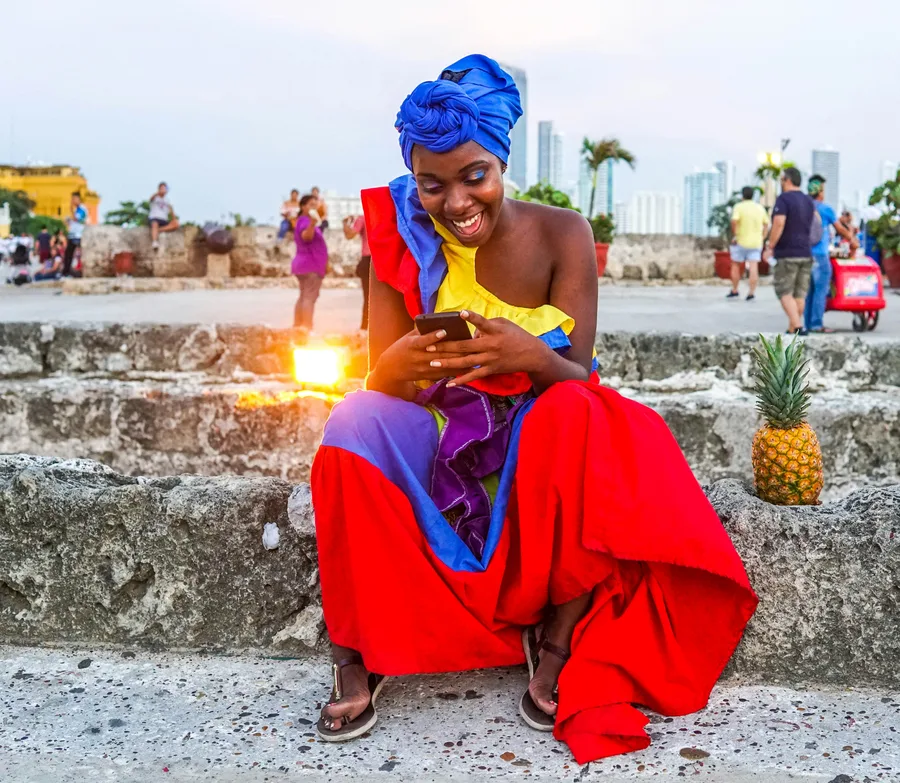
"They are not carrying fruit for the photograph. They are carrying the memory of a people who chose to be free before anyone else."
If there is one sound that is Cartagena, it is neither vallenato nor salsa: it is champeta. This genre, born in the Afro-descendant neighborhoods of the city, tells the social history of Cartagena better than any museum could.
Its origins go back to the 1970s. Ships arriving at the port brought, among their cargo, records of African music: Congolese soukous, highlife, South African mbaqanga. In the working-class neighborhoods, those rhythms blended with the Afro-Colombian heritage — the bullerengue, the mapalé — and with Caribbean influences such as reggae and Haitian compas. From that fusion, which began with a sound called *chalusonga* that emerged in San Basilio de Palenque, champeta was born.
For years it was music scorned by the city's upper classes, associated with poor neighborhoods and the Black population. They called it, with contempt, "music of champetúos." But in those very neighborhoods it became collective therapy, pride, and identity. Over time, what had been rejected became Cartagena's defining sound, and today champeta fills stages inside and outside Colombia.
Champeta cannot be understood without the picós (from the English word *pick-up*): enormous sound systems, often mounted on trucks and painted in vivid, clashing colors, that bring music into the street and set entire neighborhoods dancing until dawn. The picó is not merely a speaker: it is a gathering point, a neighborhood totem, the place where generations have learned to dance. Each picó has its name, its reputation, and its followers.
If the walled city is the Cartagena put on display for visitors, the Mercado de Bazurto is the Cartagena that simply lives. About four kilometers from the tourist center, it is a loud, chaotic, overflowing labyrinth that cartageneros call *el mercado del pueblo* — the people's market. It is not a polished or comfortable version of the city: it is the real one.
The original market was in the historic center, but it burned down in 1965 and reopened three years later at its current location. The people who carried Cartagena's culinary, musical, and artisanal traditions stayed there, and an entire neighborhood grew up around it. That is why Bazurto is today a kind of living museum of Afro-Caribbean culture, even if no one calls it a museum.
Every morning, the cooks from Cartagena's finest restaurants come down to Bazurto to haggle over the freshest fish — corvina, sierra, pargo — along with plantains, ñame, and fruits you will never find in a supermarket: zapote, mamoncillo, lulo, corozo. Through its aisles, champeta blares from the picós, whole fish sizzle in wood-fired kitchens, and the most honest Caribbean food in the city is served, without ceremony, to anyone who sits down.
Bazurto is not for everyone: it is hot, it smells strongly of fish, and it is noisy and crowded. But for anyone who wants to truly understand the city, it is essential. The unanimous recommendation is to visit with a local guide, both for navigating the labyrinth and for approaching with respect a space that is, above all, the workplace of thousands of people. Several operators from the community itself offer tours that end with fried fish, coconut rice, and yuca in the very canteens where Anthony Bourdain once filmed.
The cuisine of this other Cartagena is African, Indigenous, and Caribbean all at once. It was born in the kitchens of Afro-descendant women — many with roots in Palenque — who adapted techniques brought from across the Atlantic to the ingredients of the tropics. These are the flavors you should not miss:
To experience all of this in a single place, many cartageneros and travelers converge on the Bazurto Social Club, in Getsemaní: a venue that celebrates the culture of the market and the picó, with live champeta and a kitchen that pays homage to the flavors of the people. It is a comfortable and safe way to step into the Afro-Caribbean party without venturing into the neighborhoods at night — something best avoided on your own.
Engaging with this other Cartagena is one of the richest experiences the city has to offer, but it is best approached thoughtfully and with sensitivity. A few keys to making it a genuine encounter rather than a spectacle:
Cartagena can be visited in two days of walls and sunsets, and it would be a beautiful trip. But if you leave with only that, you will have missed the essential truth: that its music, its food, and its joy were born from the Afro-descendant community that has inhabited it for centuries. The walled city is the postcard. Afro-Caribbean Cartagena is the story. And the story, almost always, begins precisely where the photograph ends.
Experiences
Curated experiences by GetYourGuide, our official partner.
Enable marketing cookies to view experiences.
Travel newsletter
Each month, a selection of destinations, local guides and tips from people who live there.