
Madrid Travel Guide
Art, gastronomy and unstoppable energy: the Spanish capital up close.
Madrid never truly sleeps. It shifts tempo after dark, packs three world-class museums into a few square kilometres, and keeps the culinary and cultural heritage of an entire nation tucked into its alleyways.
Why Madrid
Madrid doesn't win you over at first sight the way Barcelona or Seville do: it wins you over with its atmosphere. It's a city that doesn't boast a single iconic monument, but rather a way of living the street —the terraces, the tapas, the impossible hours, life until the small hours— that hooks you more than any postcard. Capital of Spain and home to more than three million people, it's an open, welcoming city that is surprisingly easy to explore on foot.
It does, however, have three world-class things: one of the finest museum triangles on the planet (Prado, Reina Sofía, Thyssen, now a UNESCO World Heritage Site as the "Landscape of Light"), a park —the Retiro— that is among the most beautiful in Europe, and a food scene where the traditional tavern serving callos sits alongside the avant-garde restaurant. The best of Madrid isn't what you see, it's what rubs off on you: the habit of heading out at any hour and finding the streets full of people having a good time.
This guide tells you what to see without the stress, which neighbourhood to base yourself in, where to eat properly, when to come and how to make the most of the city, with an itinerary so you don't miss the essentials.
"Madrid has something no other city has: the vitality of someone who has not yet decided what they want to be, and tries everything, enthusiastically."
What to see: the essentials
Don't try to see it all. These are the ones that are truly worth it:
- Museo del Prado. One of the finest painting museums in the world. Velázquez (Las Meninas), Goya, El Greco, Bosch (The Garden of Earthly Delights). Book tickets online in advance; the morning slots sell out fast. Entry is free for the last two hours of the day.
- Parque del Retiro. Madrid's green lung and the best place to understand the city. The lake with its rowing boats, the Palacio de Cristal, the Rosaleda rose garden. A World Heritage Site. A must first thing in the morning or at sunset.
- Palacio Real and Catedral de la Almudena. The largest royal palace in Western Europe, with the Jardines de Sabatini beside it and the Almudena opposite. Book tickets.
- Plaza Mayor and Puerta del Sol. The historic heart. The Plaza Mayor, arcaded and monumental; Sol, Spain's kilometre zero, always on the move.
- Gran Vía. Madrid's great avenue: cinemas, musical theatres, early 20th-century architecture. The epicentre of the hustle and bustle.
- Reina Sofía. The modern art museum, home to Picasso's Guernica. Like the Prado, it has free entry hours.
- Templo de Debod. A genuine Egyptian temple, a gift from Egypt, in a park with the best sunset views in Madrid.
- Mercado de San Miguel. Next to the Plaza Mayor, for a nibble and a vermouth (touristy but beautiful; for a proper meal, the neighbourhood markets are better).
ON THE MAP
- Prado Museum
- Retiro Park
- Royal Palace
- Plaza Mayor
- Puerta del Sol
- Gran Vía
- Temple of Debod
- La Latina (Cava Baja)

Neighbourhood by neighbourhood
Madrid is best understood neighbourhood by neighbourhood, each with its own character:
- La Latina. The traditional soul of Madrid. Medieval streets, taverns, and the epicentre of tapas (the Cava Baja is the most famous street). On Sundays, El Rastro, the most emblematic flea market in Spain. A few minutes' walk from the Plaza Mayor and the Palacio.
- Barrio de las Letras (Huertas). The neighbourhood of the Golden Age writers (Cervantes, Lope de Vega). Charming streets, terraces, a literary and bohemian atmosphere.
- Malasaña. The alternative, modern neighbourhood: vintage shops, speciality coffee, nightlife and the spirit of the Movida. Young and creative.
- Chueca. Vibrant, full of shops and the heart of Madrid's LGBTIQ+ community. Terraces, design shops and plenty of life.
- Barrio de Salamanca. Madrid's elegant side: grand avenues, luxury shops (the Golden Mile on Serrano), stately architecture. For an unhurried stroll.
- Lavapiés. The most multicultural neighbourhood: street art, food from around the world, an alternative vibe. Madrid at its most diverse.
- Chamberí. Residential and authentic, with real neighbourhood life and good food, away from the crowds.
The Bernabéu and Real Madrid
Even if you're not a football fan, the Santiago Bernabéu is one of the most impressive visits in Madrid. Opened in 1947 and completely renovated in 2024, Real Madrid's stadium is now one of the most modern and iconic sports venues in the world: a futuristic mass of clad steel right on the Paseo de la Castellana.
The Tour Bernabéu takes you inside: the Real Madrid Museum —one of the most visited in the city—, which displays the 15 European Cups, the Ballon d'Or trophies and a collection of more than 200,000 objects that tell the story of the most decorated club in football. The tour includes a panoramic view of the stadium's interior and —when works and the fixture calendar allow— areas such as the dressing rooms and the pitchside benches. It ends, of course, in the official shop.
- Tickets: the Tour is bought online (cheaper than at the ticket office) from around €35-40 per adult; there is a reduced rate for children, and under-5s go free. Book in advance, especially in high season.
- Opening hours: Monday to Saturday, 9:00 to 19:00; Sundays and public holidays, 9:30 to 18:30. On match days the visit is shortened and can only be done until around five and a half hours before kick-off.
- Getting there: Santiago Bernabéu metro (line 10), right on the Paseo de la Castellana.
And seeing a match? Experiencing a Real Madrid game at the Bernabéu is hard to beat. Tickets are put on sale by the club a few weeks before each fixture. If one coincides with your trip, it's well worth it; if not, the Tour still lets you see the stadium from the inside.

The Bernabéu, renovated in 2024, is one of the most modern and iconic sports venues in the world.
Where to eat
Madrid has two things: its own traditional cuisine and, on top of that, the best of all of Spain (every region has its gastronomic "embassy" in the capital). The local classics:
- Cocido madrileño. The king of dishes. A stew of chickpeas, vegetables and meats served in "three courses" (first the soup, then the chickpeas and vegetables, then the meats). Hearty and wintry. Places of reference: taverns and century-old establishments such as Malacatín or Lhardy.
- Callos a la madrileña. Tripe in a thick sauce of paprika, chorizo and morcilla. You either love it or hate it. Very traditional.
- Bocadillo de calamares. The most surprising tapa: fried squid in bread, nothing else, in a city with no sea. The temple is El Brillante (next to Atocha), which serves around 2,000 a day; also La Campana and La Ideal, next to the Plaza Mayor.
- Huevos rotos (or estrellados), oreja a la plancha, gambas al ajillo, patatas bravas. The classic tapas repertoire.
- The century-old bars. Madrid has well over a dozen bars and restaurants more than a hundred years old (La Casa del Abuelo for the prawns, Casa Labra for the cod, Café Gijón). Eating in one is eating history.
To drink: a caña (a small beer, always; a pint gets warm), vermouth at midday, and the house wine. And one custom: here you have tapas standing up, at the bar, hopping from bar to bar.

La Latina and the Cava Baja, the epicentre of traditional tapas and Madrid's food scene.
When to go
The best time is spring (April-June) and autumn (September-November): mild weather, sunny days and the terraces at their best.
- Summer (July-August): very hot (Madrid easily tops 35°C) and half the city on holiday —many neighbourhood bars close in August—. In return, the city is quieter and there is open-air programming (the Veranos de la Villa).
- Winter: less cold than other European capitals, but it's worth wrapping up. It's the season of cocido and Christmas, when the centre fills with lights and markets.
Key dates: San Isidro (mid-May), Madrid's festivities, with street parties, chulapos and a traditional atmosphere all over the city.
Getting around
Madrid is a walking city: the historic centre is compact and almost all the essentials are within strolling distance. For everything else:
- Metro. Fast, extensive and inexpensive, the best way to cross the city. Use the Multi card (rechargeable). It connects to the airport (line 8).
- Buses and Cercanías complete the network; the Cercanías is handy for day trips (Toledo, El Escorial, Alcalá).
- On foot is the best way to enjoy the centre.
- Forget the car in the centre: traffic, impossible parking and Madrid Central (the low-emission zone). If you come by car, leave it parked.
From the airport (Adolfo Suárez Madrid-Barajas) to the centre: metro (line 8), Cercanías, the Exprés Aeropuerto (24-hour bus) or a taxi at a fixed fare.
A different plan: Madrid's surroundings
One of Madrid's advantages is what lies around it: three World Heritage cities less than an hour away, ideal for a day trip:
- Toledo (30 min by AVE). The "city of three cultures": Gothic cathedral, the Alcázar, medieval alleyways, El Greco. Possibly the best day trip from Madrid.
- Segovia (30 min by AVE). Its Roman aqueduct is one of the best preserved in the world; the Alcázar inspired the Disney castle; and roast suckling pig is a religion.
- San Lorenzo de El Escorial (1 h by Cercanías). Philip II's imposing monastery-palace, in the mountains.
- Alcalá de Henares (40 min by Cercanías). Birthplace of Cervantes, a historic university city.
- Aranjuez (with its Royal Palace and gardens) and, further afield, Cuenca (the hanging houses).
And for those travelling as a family: south-east of Madrid is Parque Warner (a theme park), in San Martín de la Vega, very close to our house in Morata de Tajuña (see below).
Where to stay in Madrid
Where you stay changes your Madrid. These are the areas we recommend:
- Centre (Sol, Plaza Mayor, Ópera): everything is within walking distance. Ideal for a first visit.
- La Latina and Barrio de las Letras: to live traditional, tapas-hopping Madrid, with atmosphere but without giving up a central location.
- Malasaña and Chueca: for a more modern Madrid of cafés and nightlife.
- Barrio de Salamanca: elegant and quiet, for those after calm and shopping.
At Fee4Me we manage vacation rentals in Madrid: we have several flats in the city centre, designed so you stay where Madrid life really happens. And for those who prefer a large house away from the hustle and bustle —ideal for families or groups—, we have a two-storey house in Morata de Tajuña, south-east of Madrid, near Parque Warner: the tranquillity of the Madrid countryside half an hour from the centre.
OUR HOMES IN MADRID
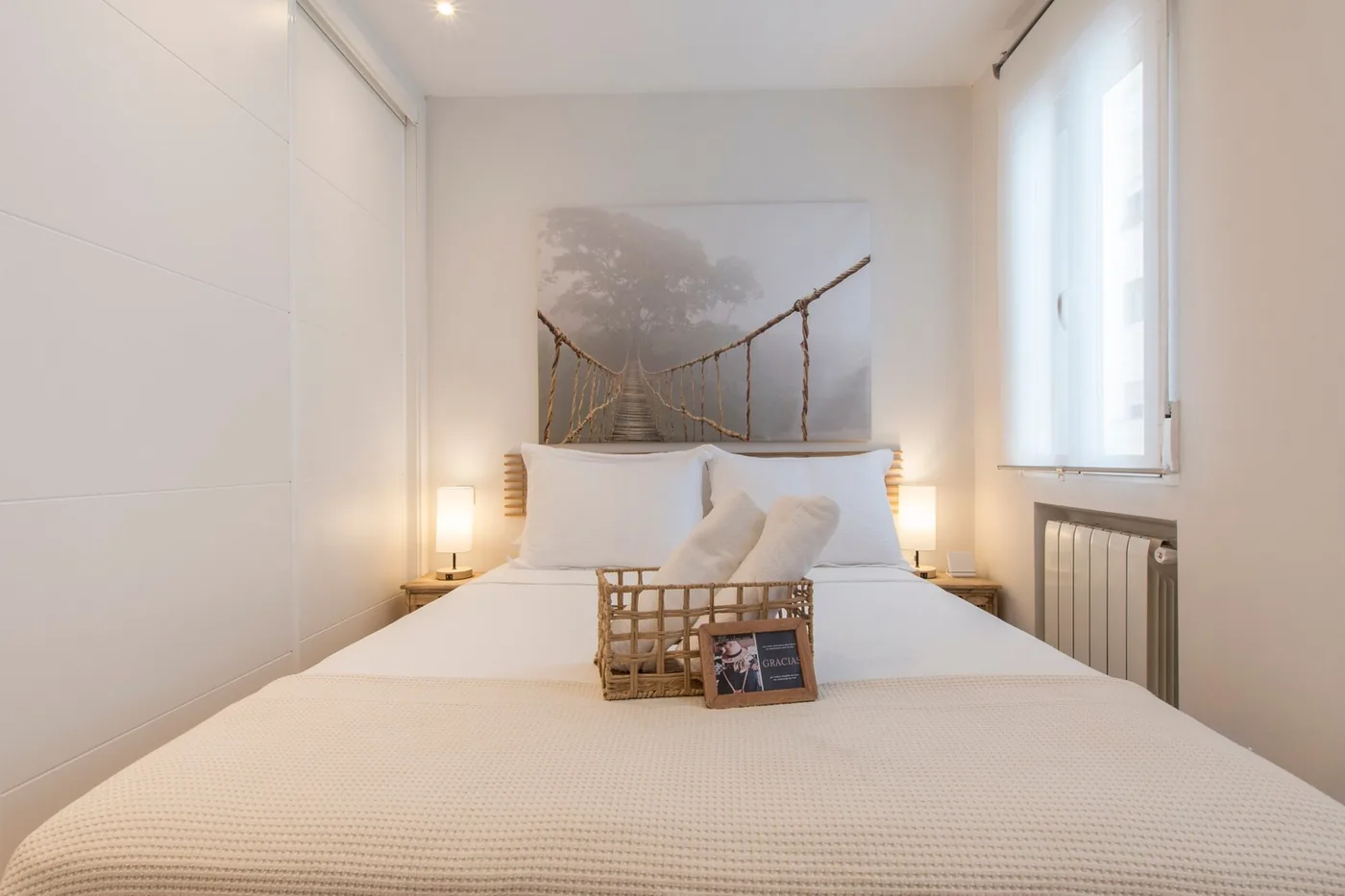 Madrid
Apartment
Elegant flat a few minutes from Atocha
Madrid · Spain
1 bd. · 1 bath · 2 guests
 Morata de Tajuña
House
La Azotea de Morata
Morata de Tajuña · Spain
3 bd. · 2 baths · 7 guests
 Madrid
Apartment
Marqués Vintage · City Center
Madrid · Spain
3 bd. · 2 baths · 5 guests
 Madrid
Apartment
Amazing apartment in the heart of Lavapiés
Madrid · Spain
1 bd. · 1 bath · 3 guests
 Madrid
Apartment
Bright and Central Flat
Madrid · Spain
2 bd. · 1 bath · 5 guests
Itinerary and tips
Day 1
Puerta del Sol and Plaza Mayor. Royal Palace and Almudena Cathedral (book ahead). Stroll through the Sabatini Gardens.
Museo del Prado (the last two hours are free). End the day walking the Paseo del Prado and Retiro Park at sunset.
Day 2
Barrio de las Letras and Reina Sofía museum (Picasso's *Guernica*).
La Latina neighbourhood and tapas along Cava Baja. If it's Sunday, El Rastro flea market first.
Day 3
Malasaña and Chueca (modern Madrid), or the Bernabéu stadium tour.
Templo de Debod at sunset, or a day trip to Toledo (30 min by high-speed train).
Day trips
Madrid is a perfect base for exploring beyond the city: Toledo (30 min by AVE, imperial city with gothic cathedral and Alcázar), Segovia (30 min by AVE, with its Roman aqueduct and fairy-tale alcázar), El Escorial (1 hour by cercanías, Felipe II's monastery-palace in the heart of the sierra) and Aranjuez (45 min by cercanías, with its royal gardens and palace on the Tagus river).
Practical tips
Book the Prado and Royal Palace online in advance.
Menú del día (1–4 pm): three courses for €12–18, the best value in the city.
Madrid runs late: lunch is around 2:30 pm and dinner starts from 9 pm.
The centre is very walkable; for longer journeys, use the metro with a Multi card.
Experiences
Book activities in Madrid
GetYourGuide, our official partner.
Things to do in Madrid
Tours, guided visits and experiences, powered by GetYourGuide.
This will load content from GetYourGuide.
 BarcelonaRead guide
 AlicanteComing soon
 TorreviejaComing soon
 MurciaComing soon
 BilbaoComing soon
 La CoruñaComing soon
 VigoComing soon
 MenorcaComing soon
 Gran CanariaComing soon
 LanzaroteComing soon
 FuerteventuraComing soon
 TenerifeComing soon